Review of the two Scientific and Industrial Days of the SPIN Research Program
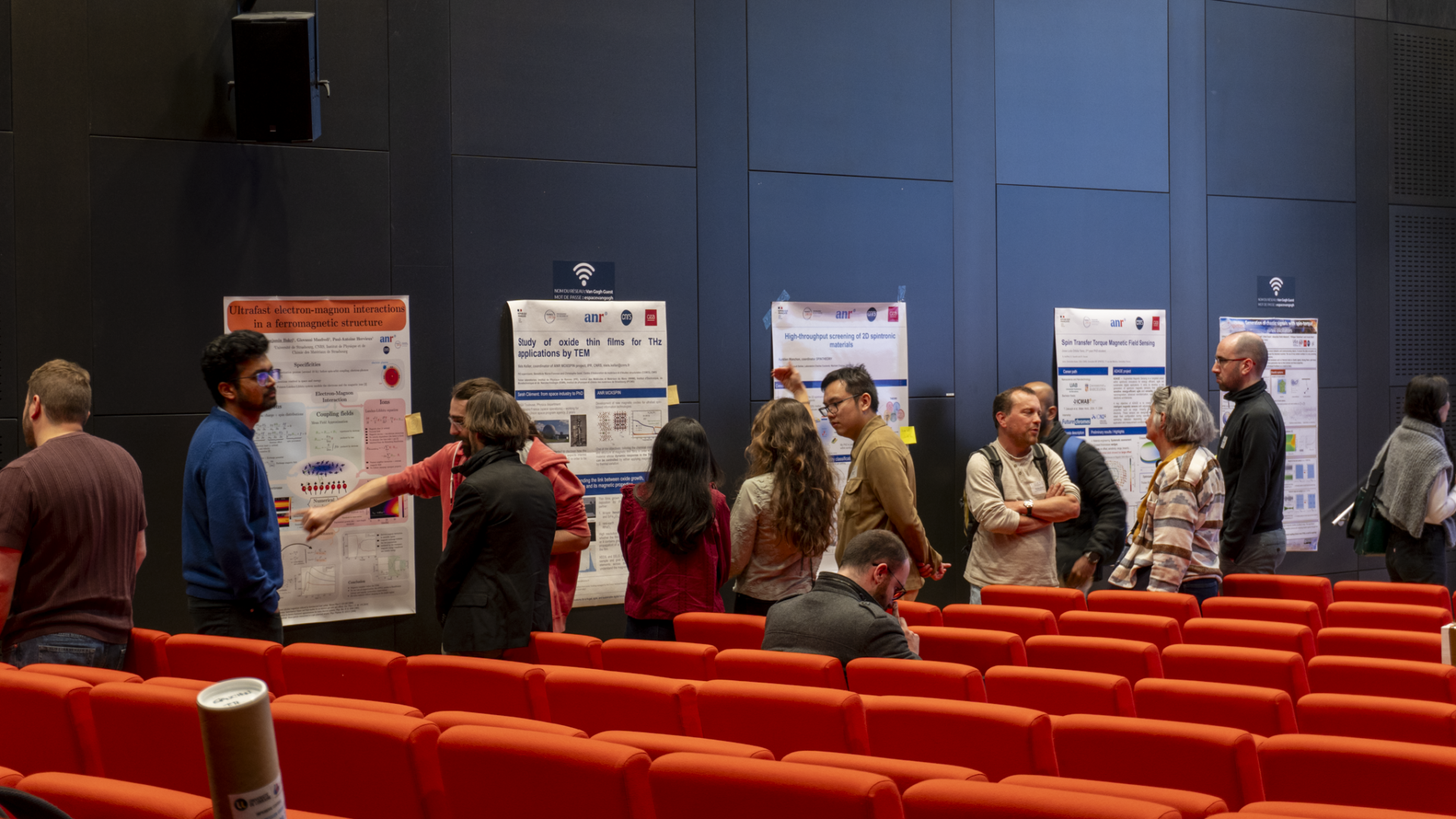
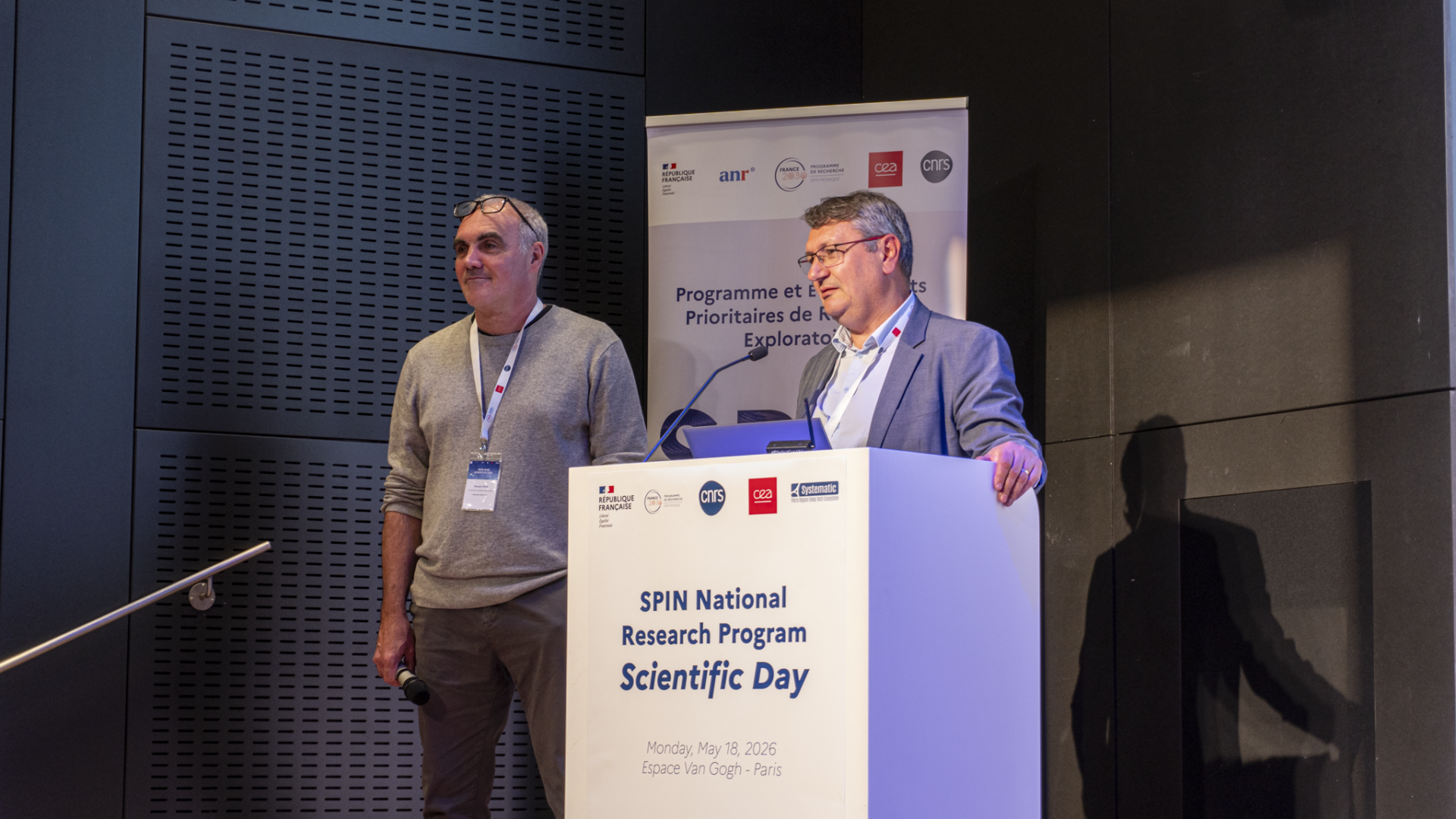
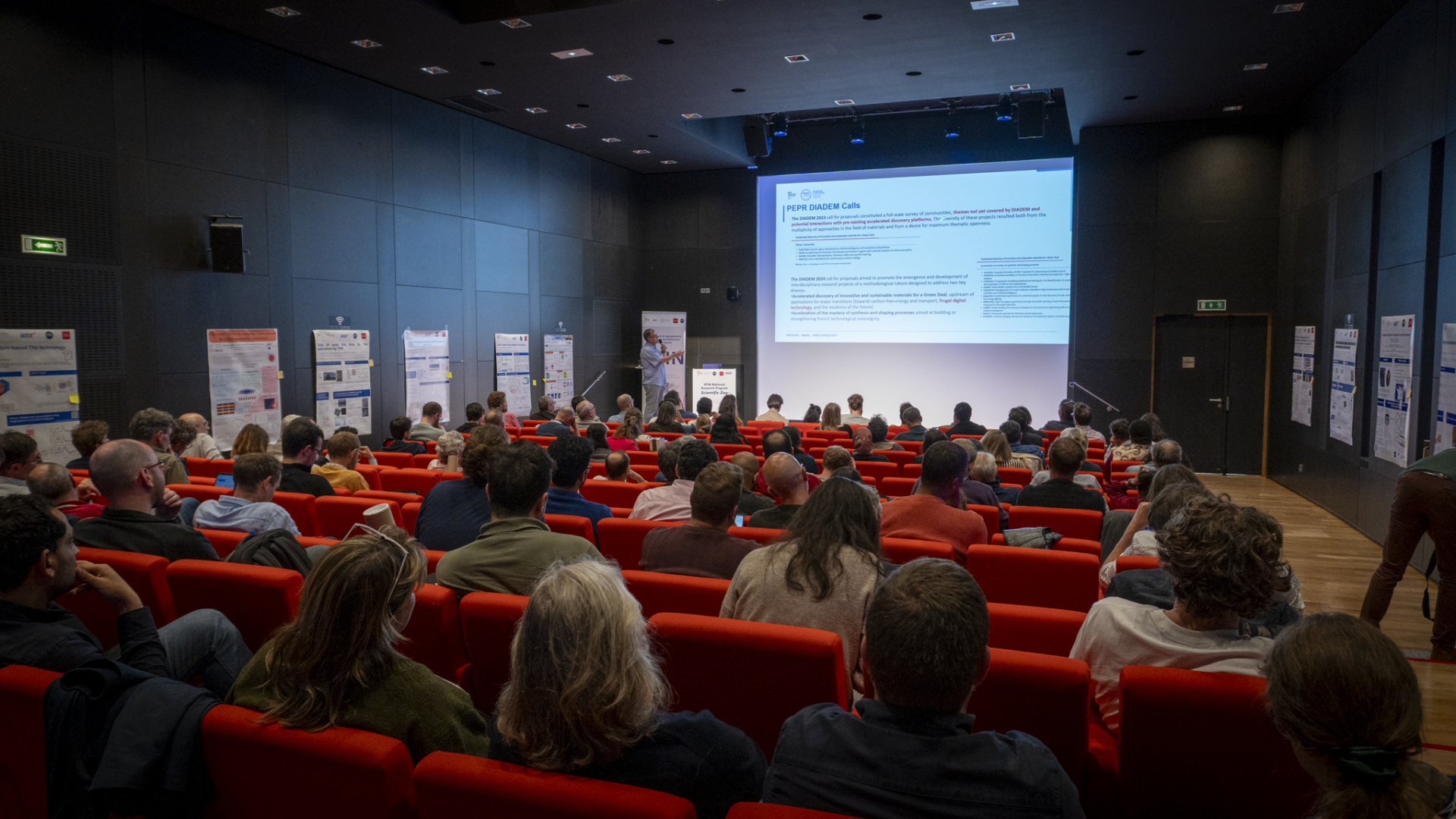
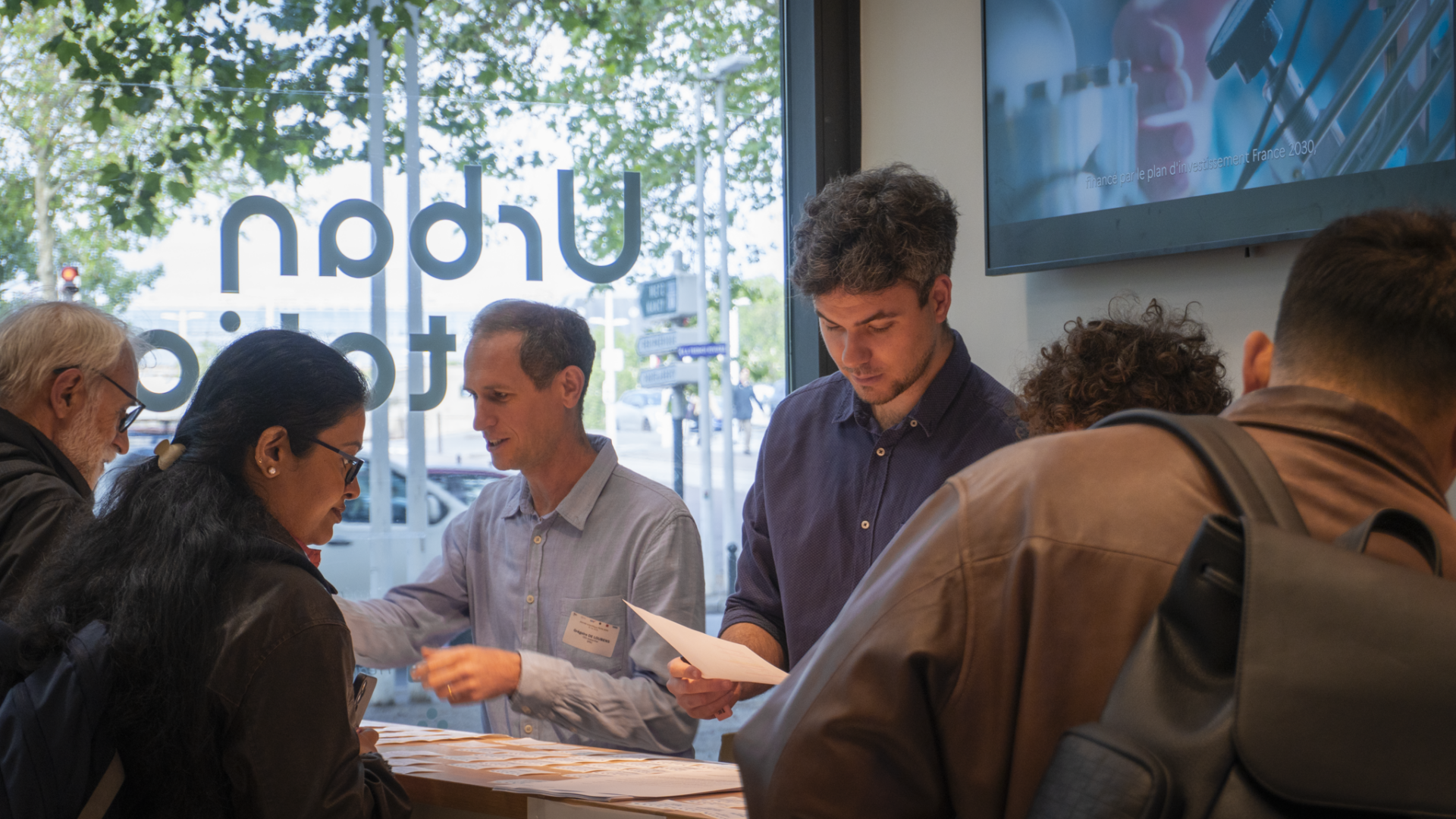
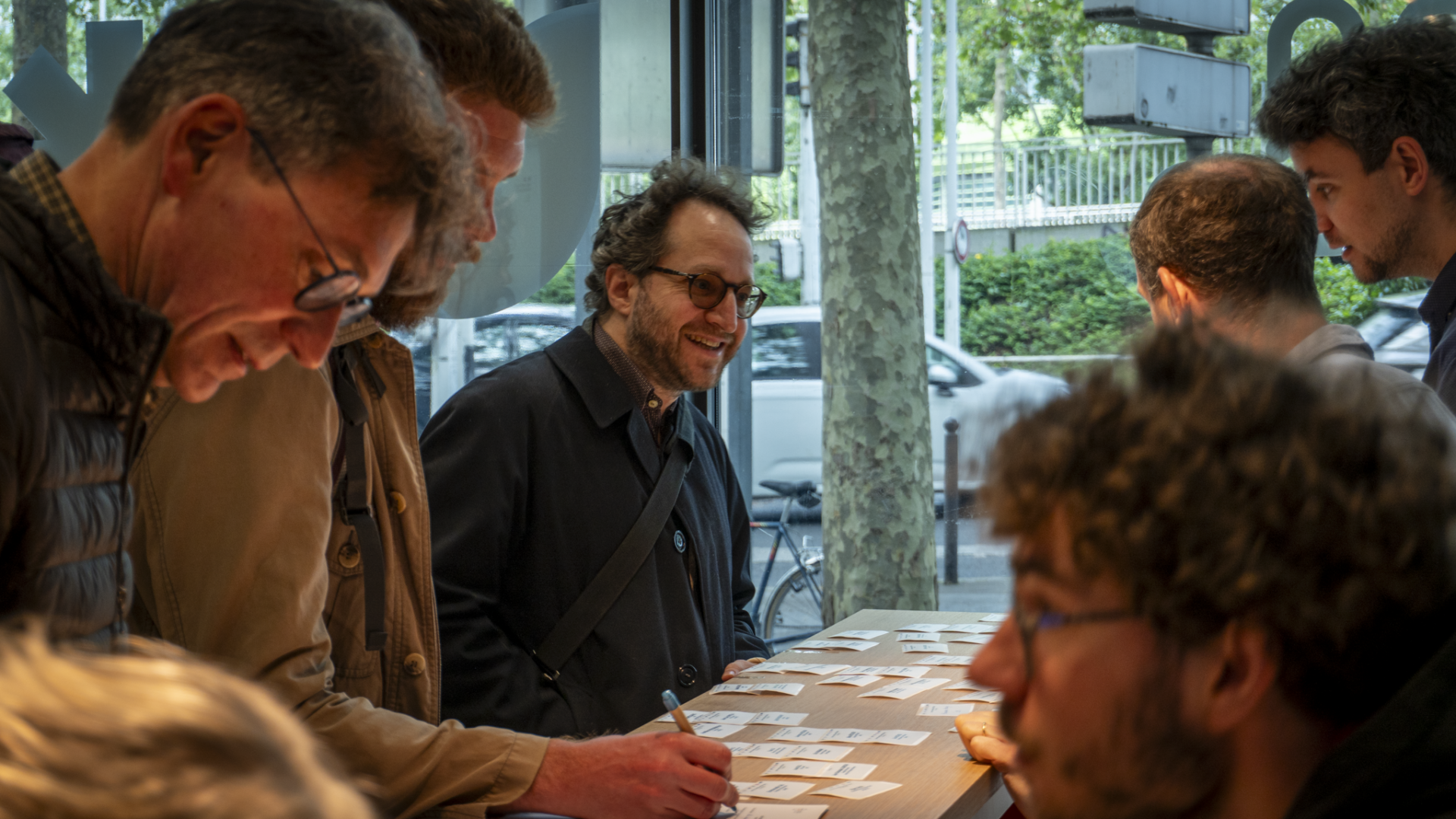
On 18 and 19 May 2026, the PEPR SPIN organised two major events at the Espace Van Gogh in Paris: the 3rd Scientific Day followed by the 2nd Industrial Day of the programme. The first aimed to bring the scientific community together around the programme’s progress, the objectives of new projects, and doctoral students’ presentations. The second sought to foster and strengthen exchanges between researchers and industry players from various sectors, covering topics such as advanced materials, spintronic sensors, and technologies ranging from GHz to THz, in order to address the concrete needs of the spintronics industry. These two days brought together nearly 280 participants, both in person and online.
The Scientific Day
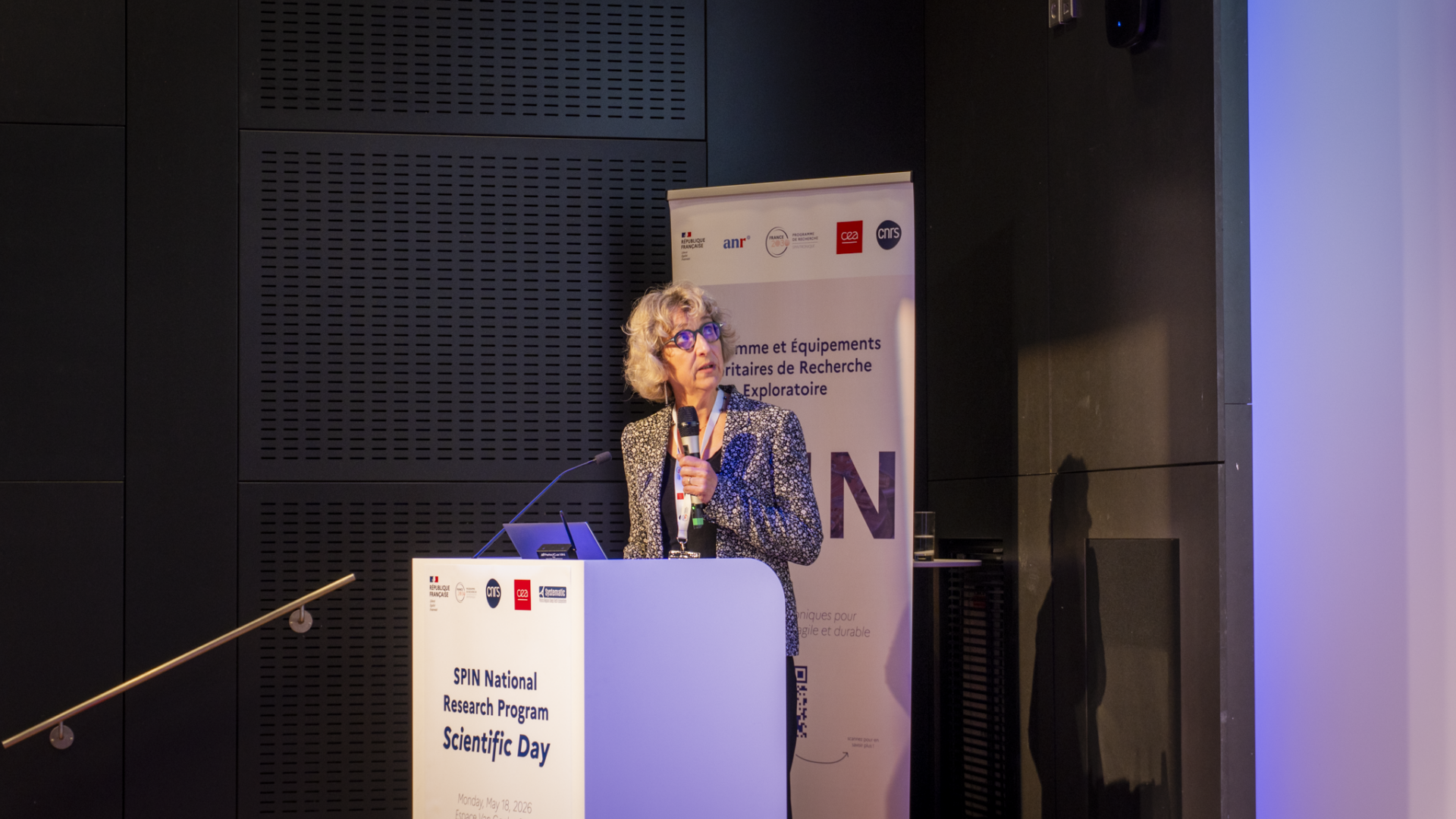
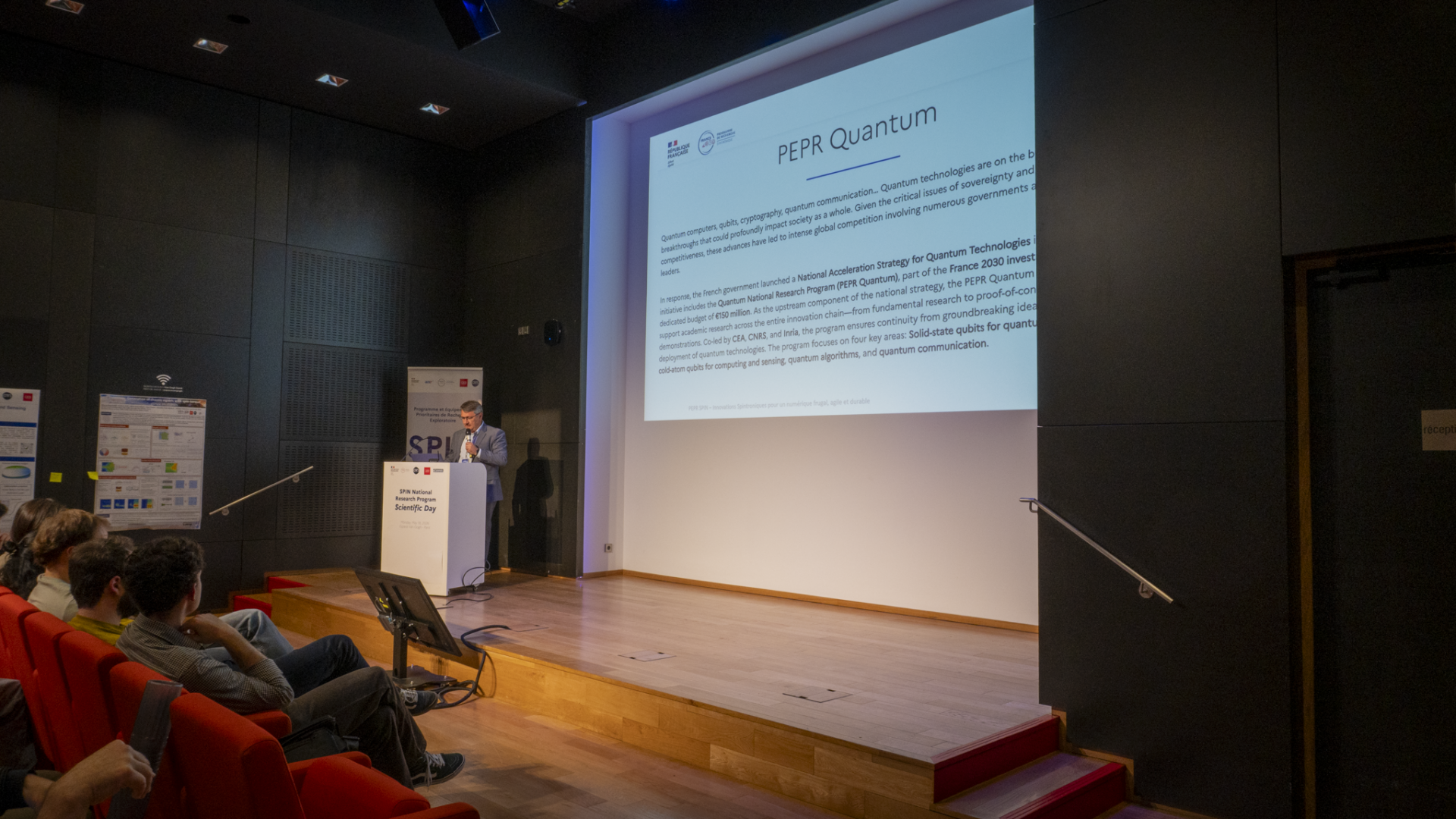
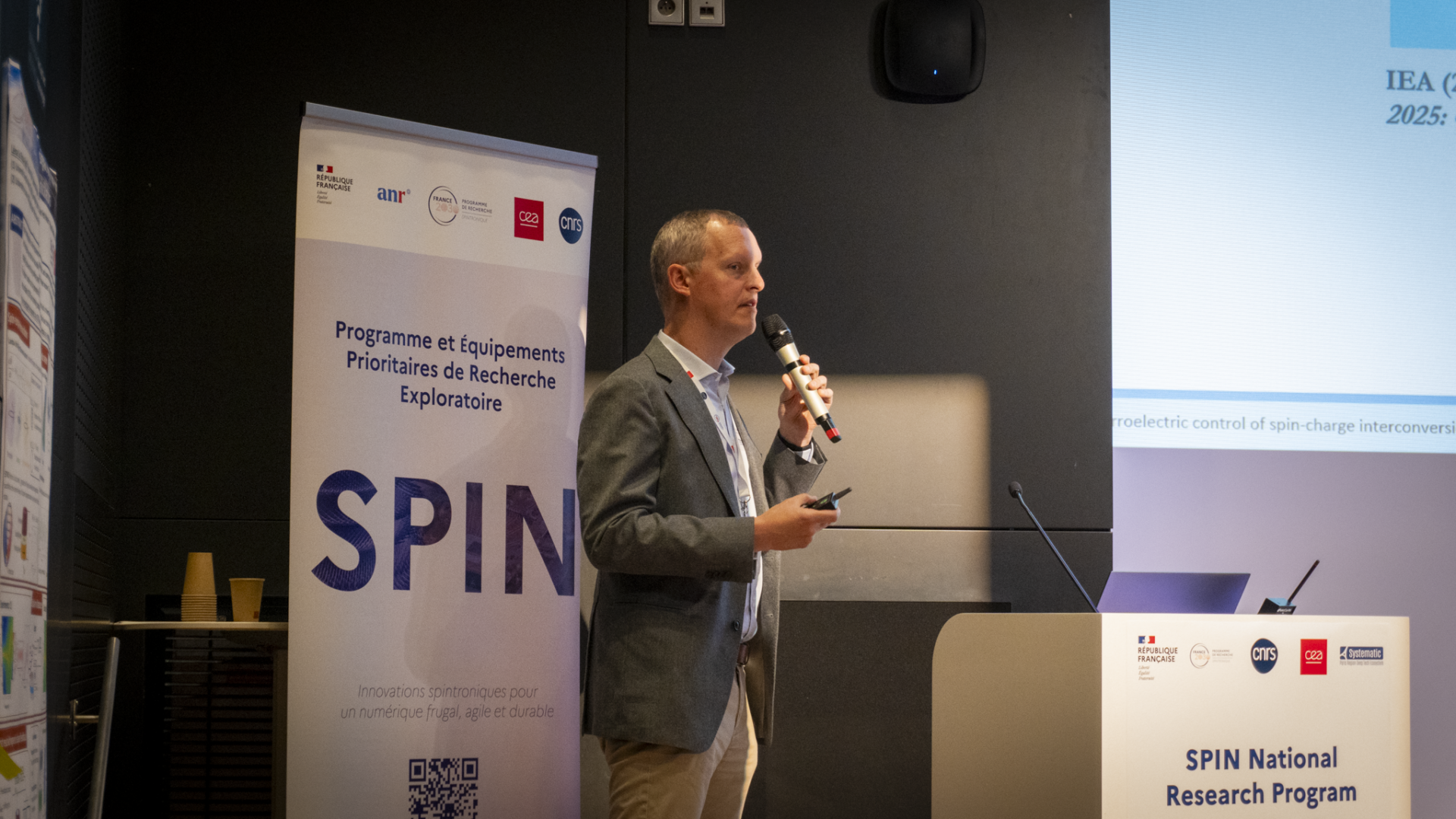
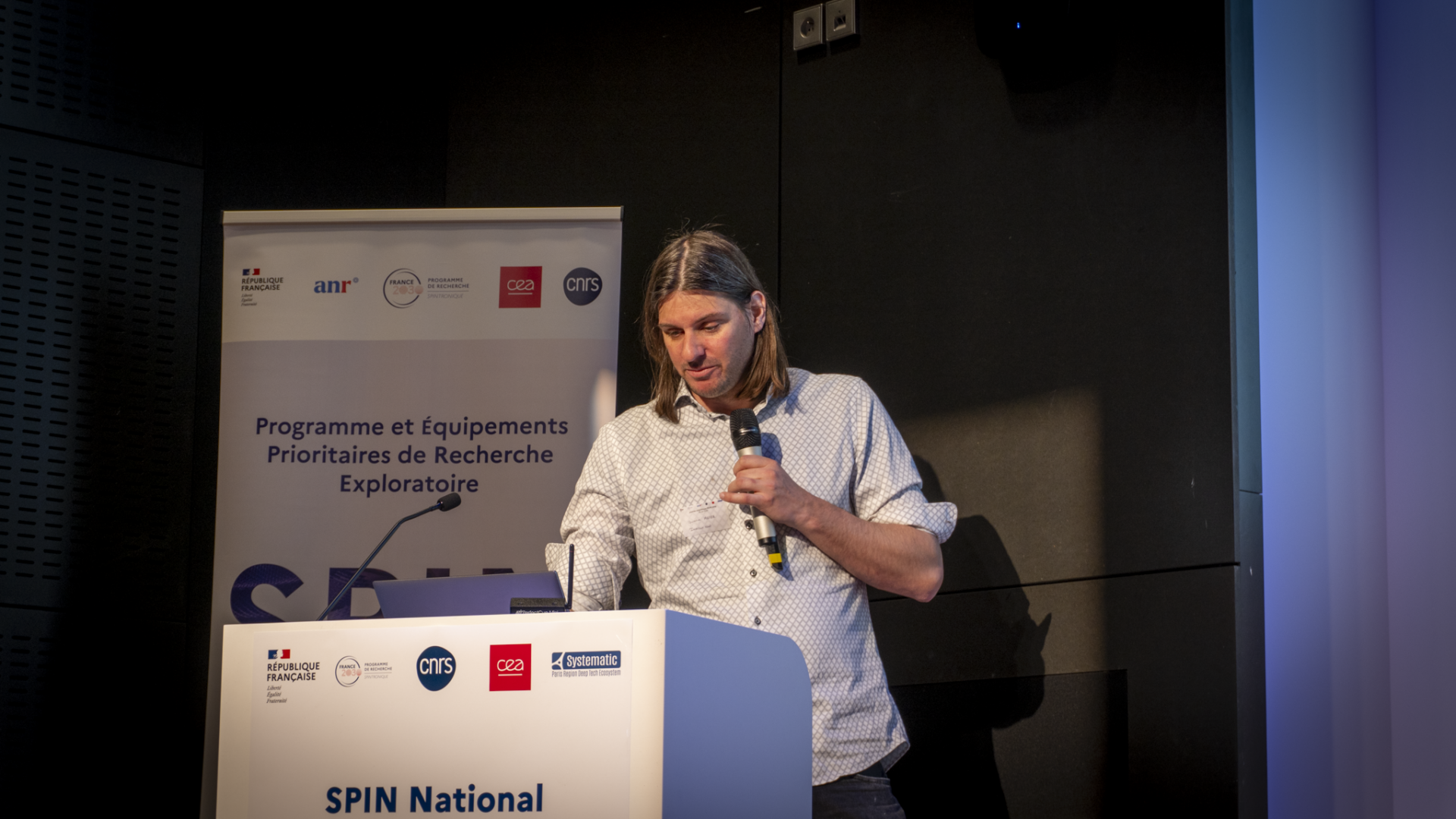
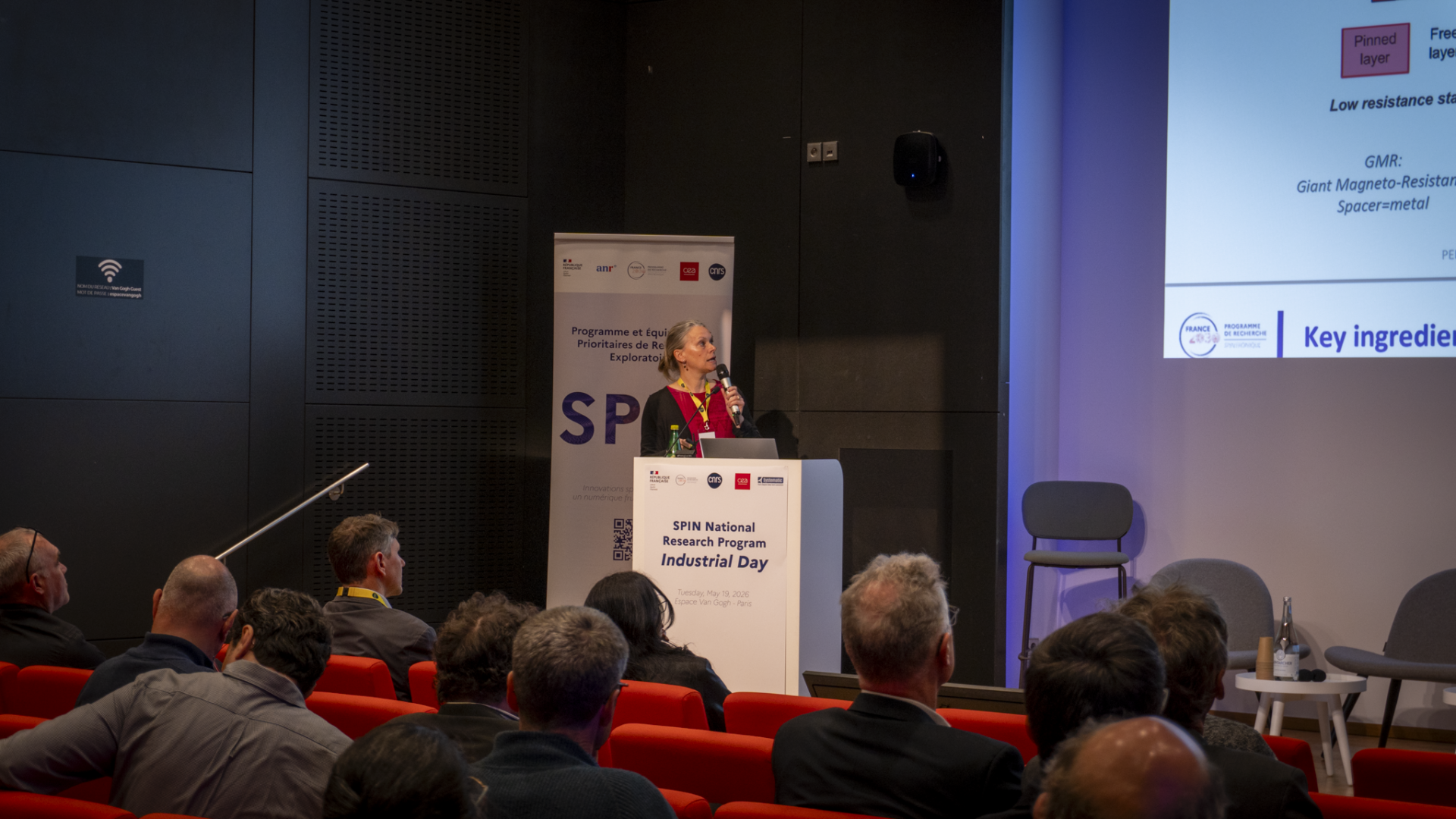
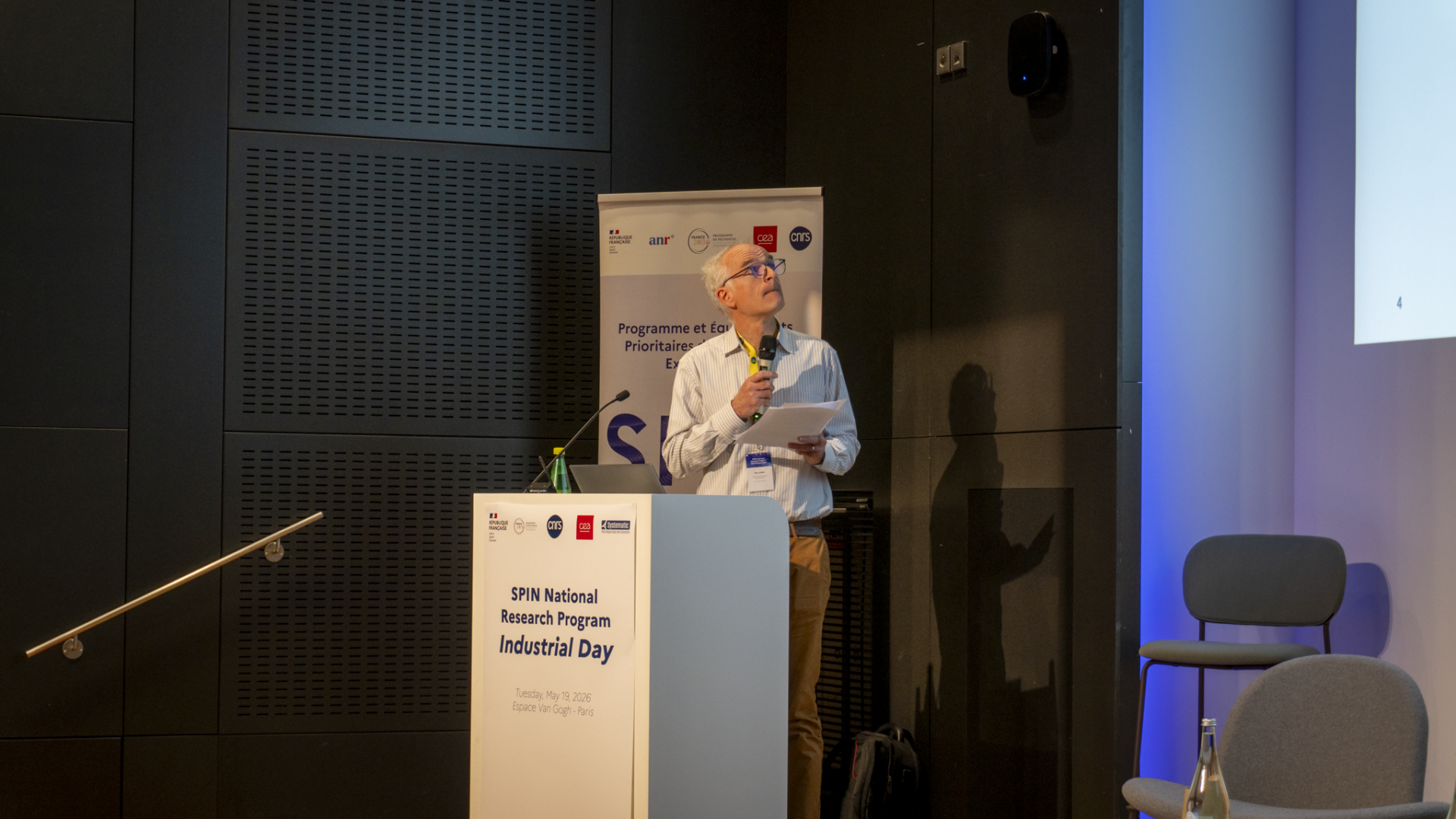
The Scientific Day offered the community a comprehensive overview of ongoing work. The co-directors of PEPR SPIN, Vincent Cros (CNRS) and Lucian Prejbeanu (CEA), presented the programme’s progress across its various dimensions: scientific, international, industrial, and outreach.
Two renowned speakers enriched the day with outstanding invited lectures. Jean-Pierre Raskin, Professor at the École Polytechnique de Louvain, addressed the question of circular design for sustainable electronics. Manuel Bibes, CNRS Research Director at Laboratoire Albert Fert and recipient of the CNRS Silver Medal in 2025, presented his work on ferroelectric control of spin-charge interconversion, paving the way for ultra-low-power non-volatile logic, also exploited within the company Nellow, launched in 2025 and winner of the EIC Transition call that same year.
These presentations were followed by an overview of projects from the 2024 ANR Call for Projects, with each team outlining the scientific challenges, proposed solutions, and a review of its first year.
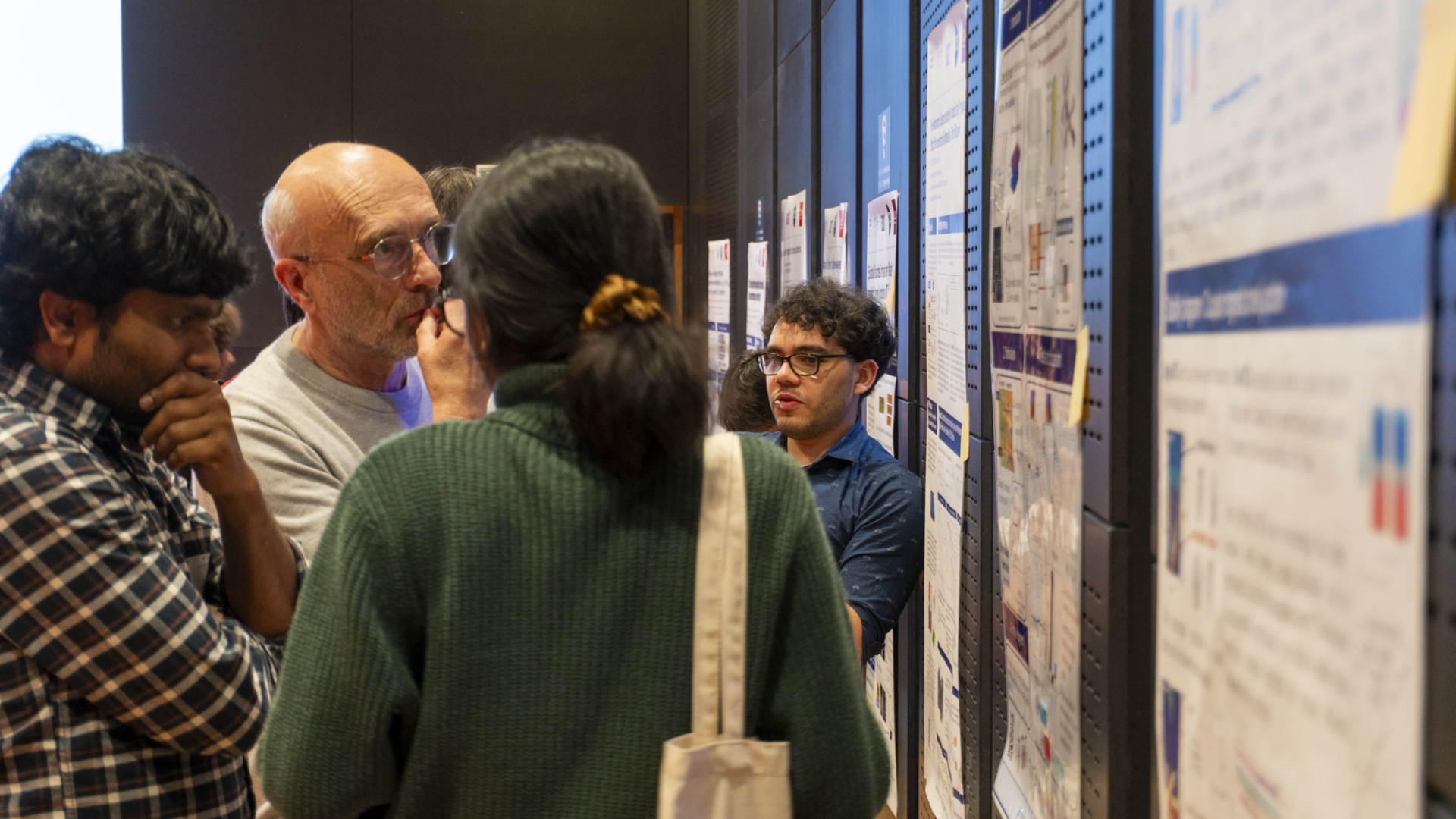
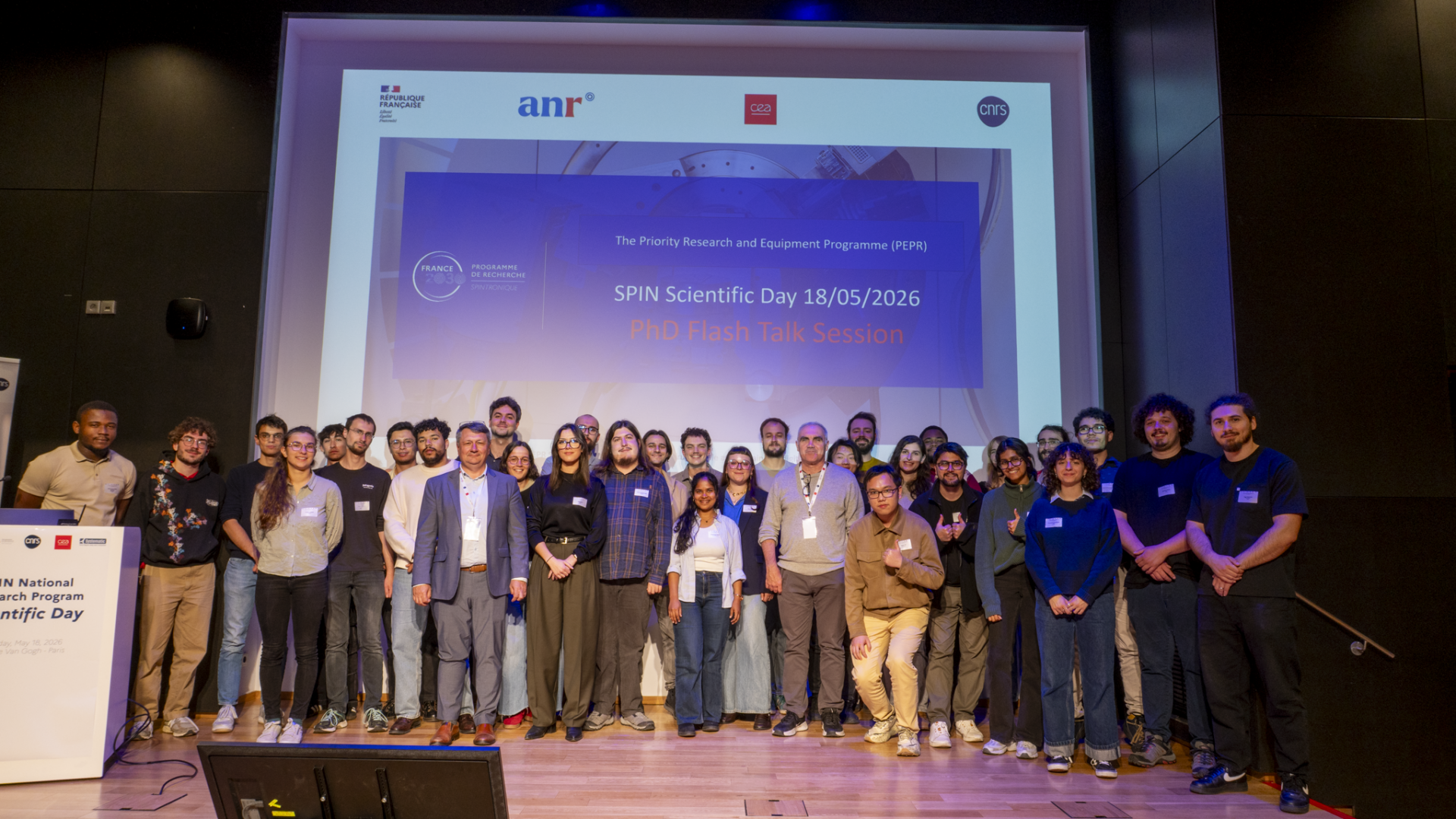
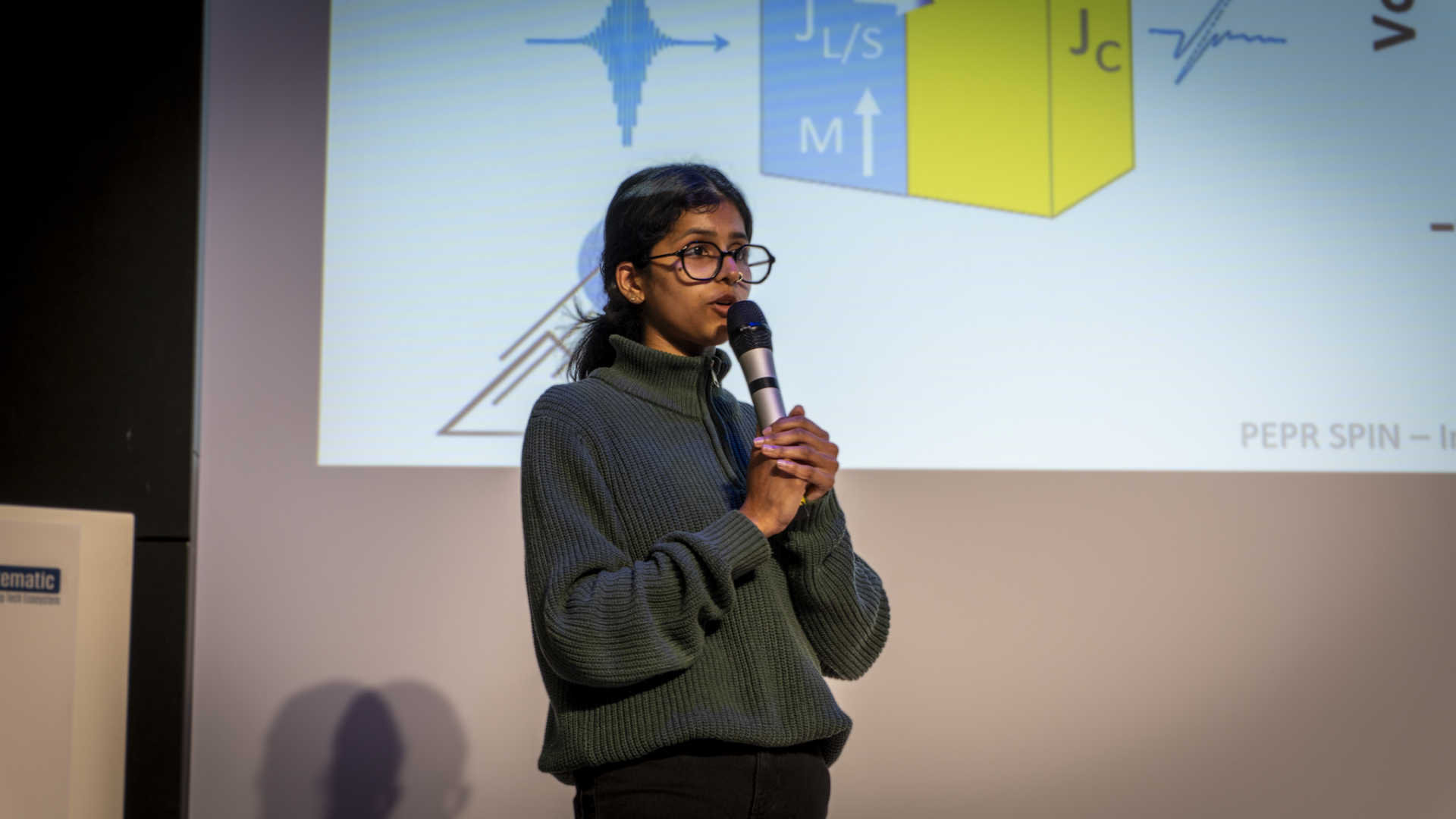
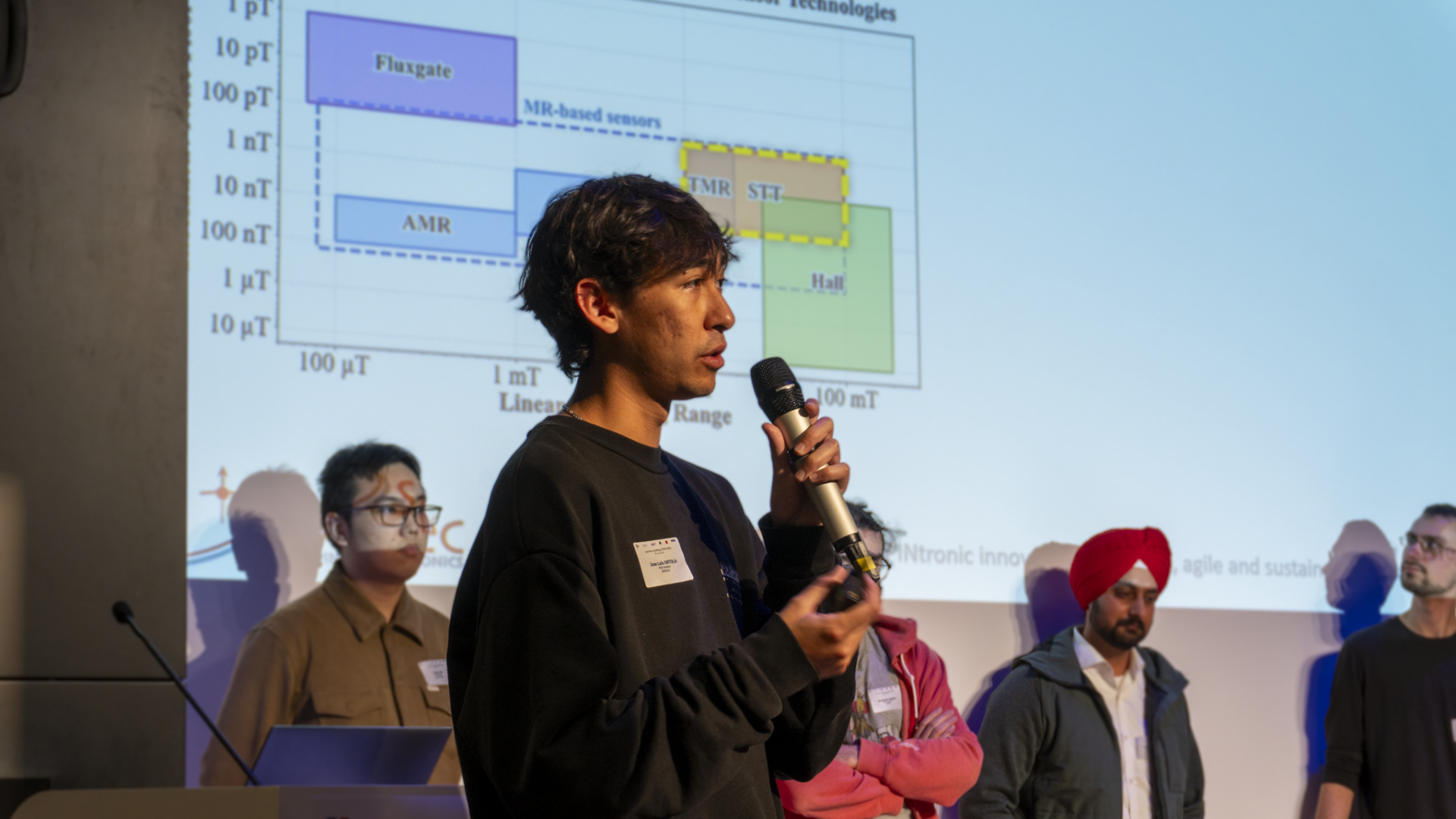
Doctoral and postdoctoral researchers of the PEPR also had the opportunity to take part in a 90-second pitch exercise, presenting their theses with conciseness and flair!
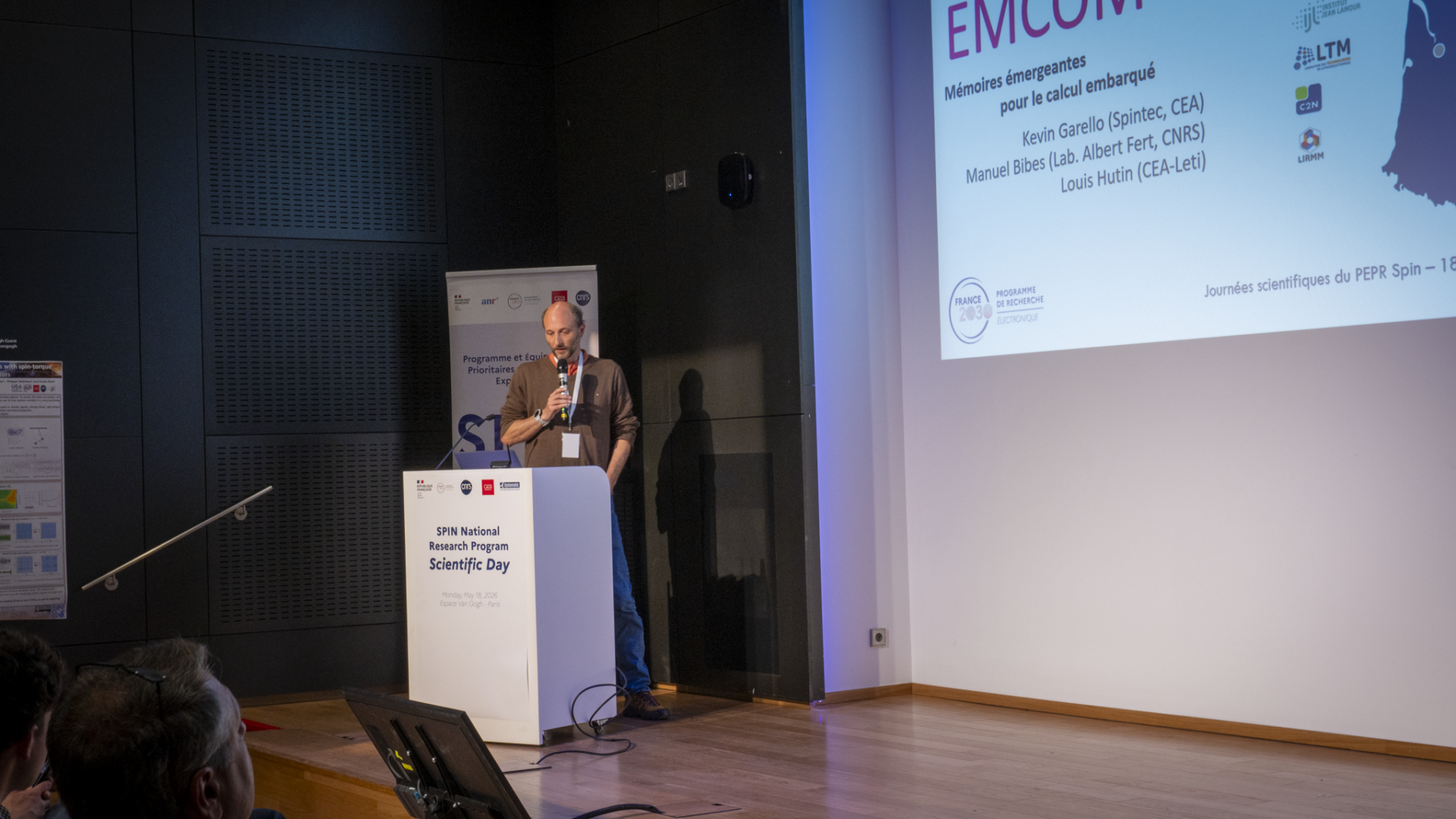
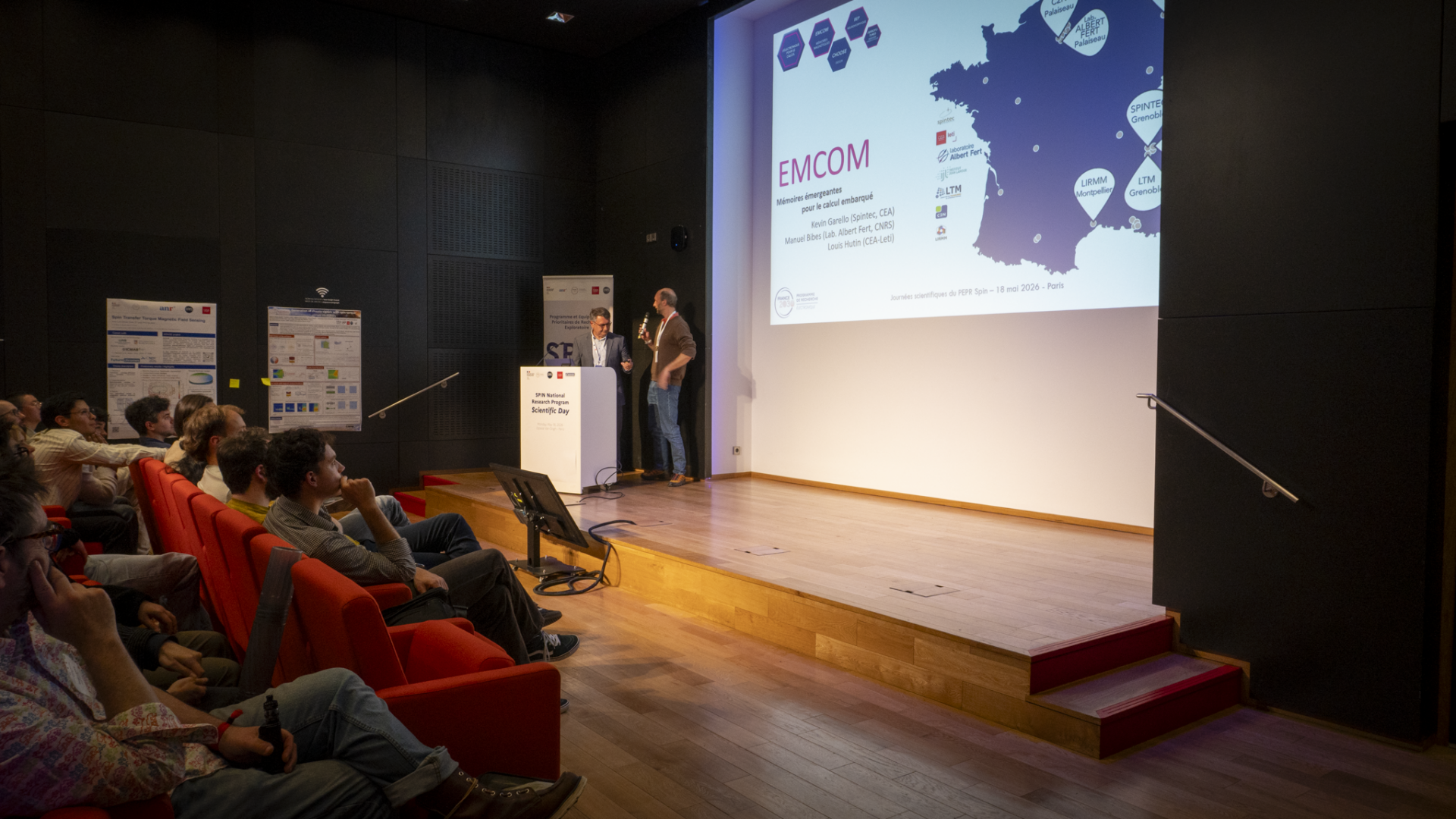
During the Scientific Day, projects from partner programmes, PEPR LUMA (LUMINESS), DIADEM (MASKY), QUANTIQUE (PRESQUILE) and Électronique (EMCOM), were also presented, shedding light on the various research efforts carried out in connection with spintronics and illustrating the synergies taking shape between these research programmes.
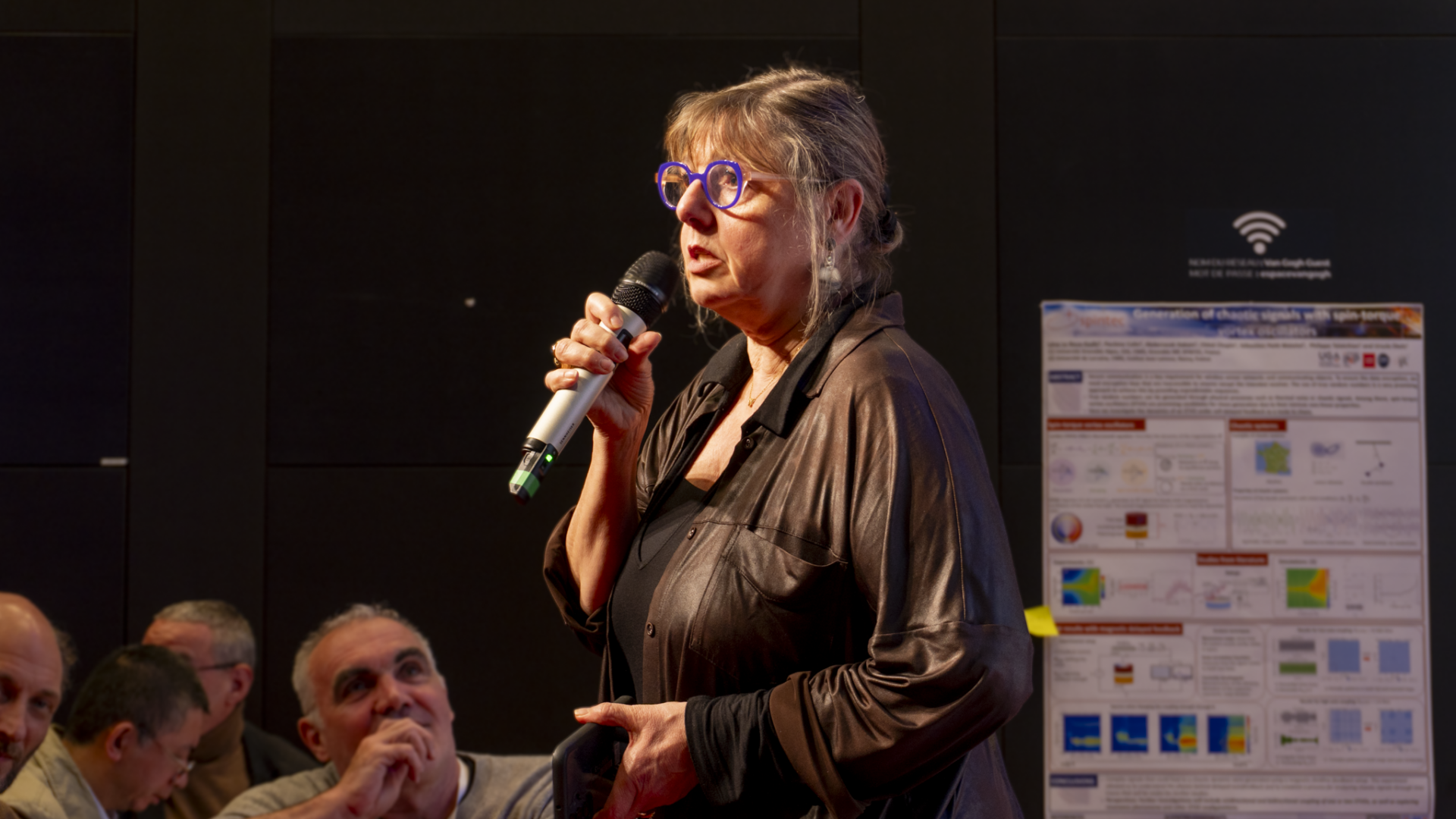
At the end of the day, Sylvie Retailleau, President of Universcience, joined Hélène Fischer, Lecturer-Researcher at the Université de Lorraine, to present details of the reopening of the Palais de la Découverte. This presentation sparked considerable discussion within the community, which will soon collaborate with the PEPR Électronique on the exhibition “Têtes Chercheuses”, planned for the Palais’s reopening in spring 2027.
The announcement raised many practical questions regarding organisation, design, and implementation, as the project represents a significant commitment: between 4 and 6 months of work, during which researchers will be called upon to communicate their field to a wider audience and design an accessible presentation for the general public.
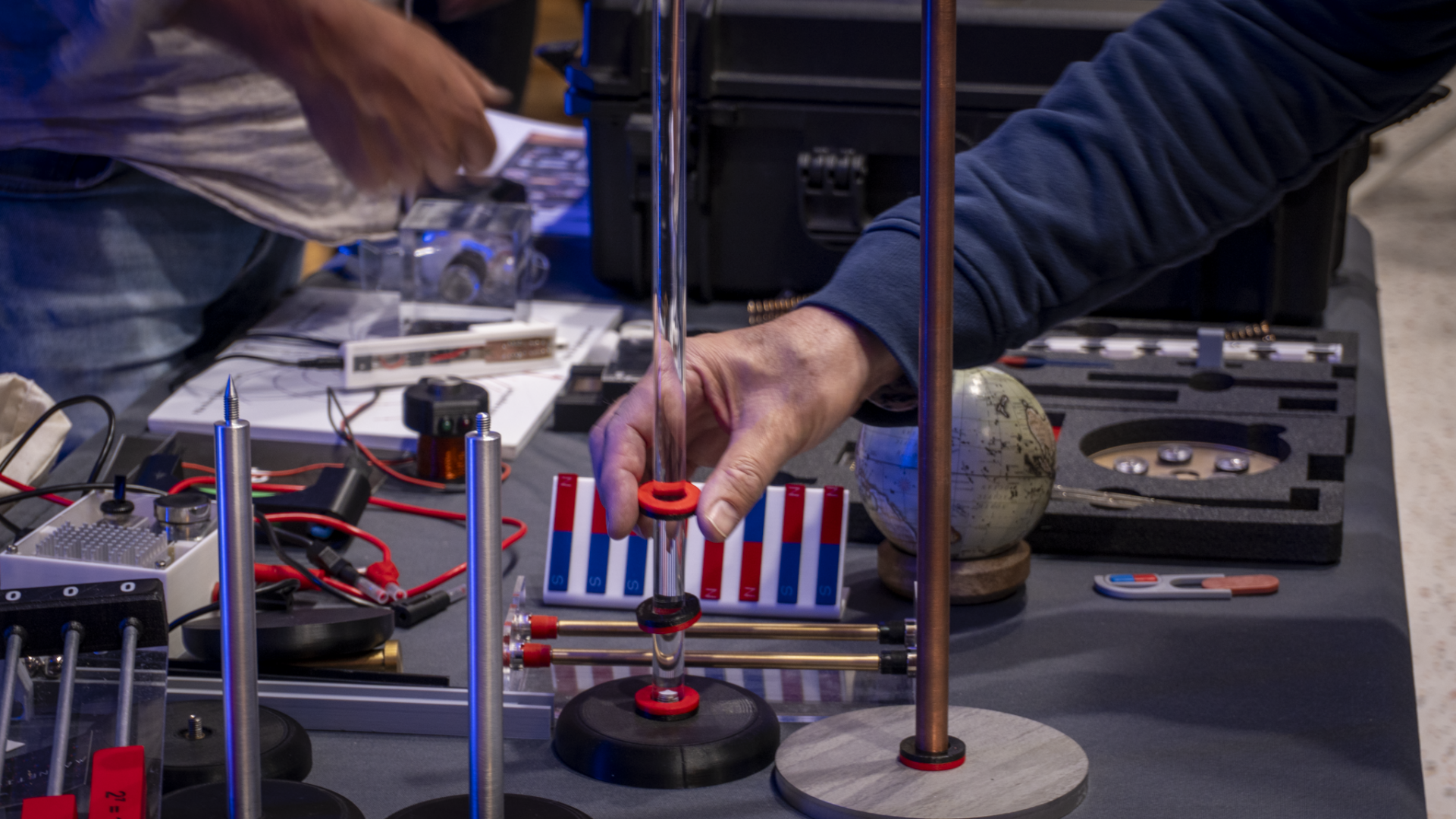
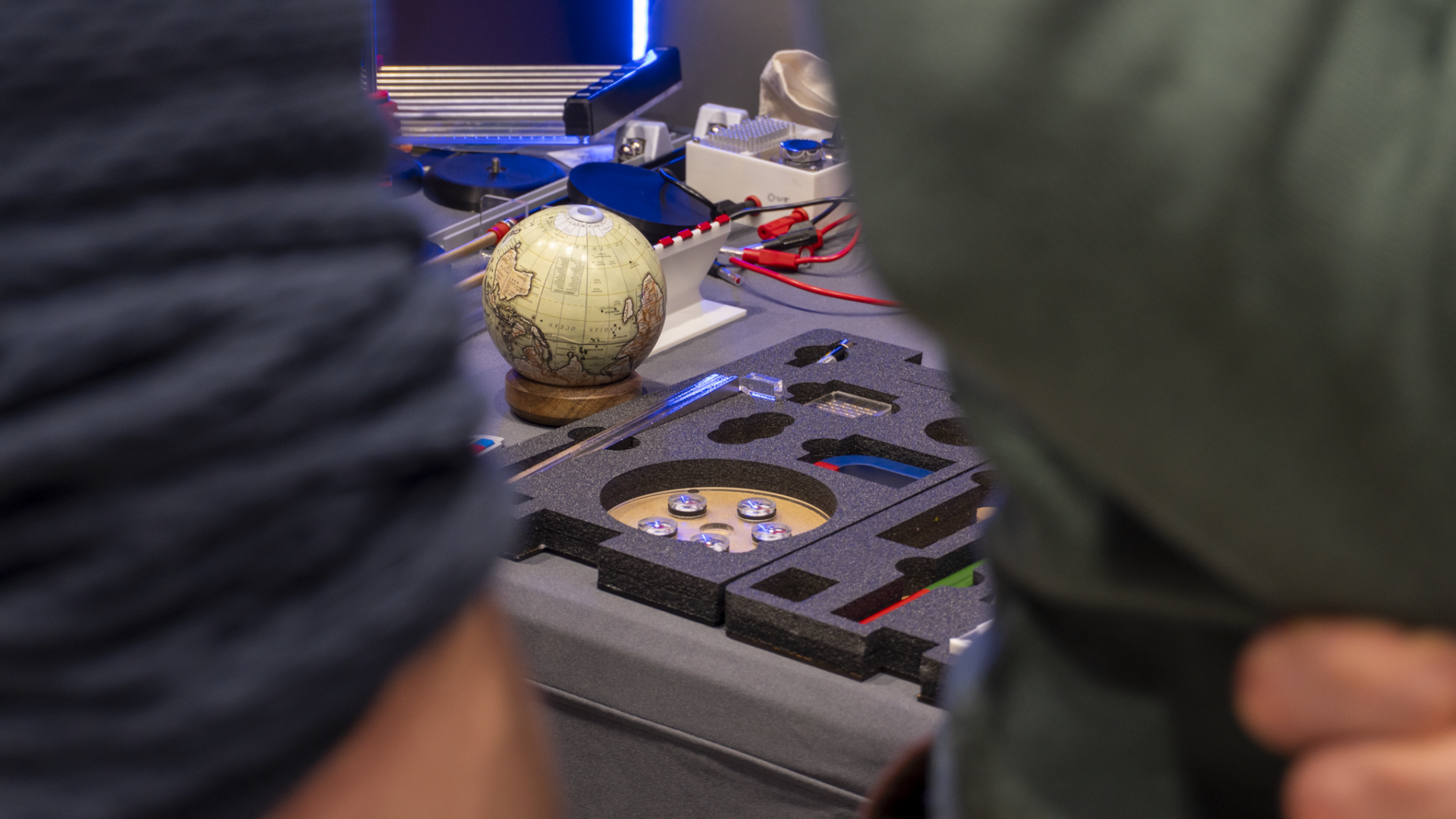
Throughout the breaks, an outreach stand hosted by Aurélien Masseboeuf, CNRS researcher at SPINTEC and Hélène Fischer, university lecturer and researcher at Institut Jean Lamour (Université de Lorraine) offered visitors the chance to discover the spintronics educational kit developed as part of the PEPR.
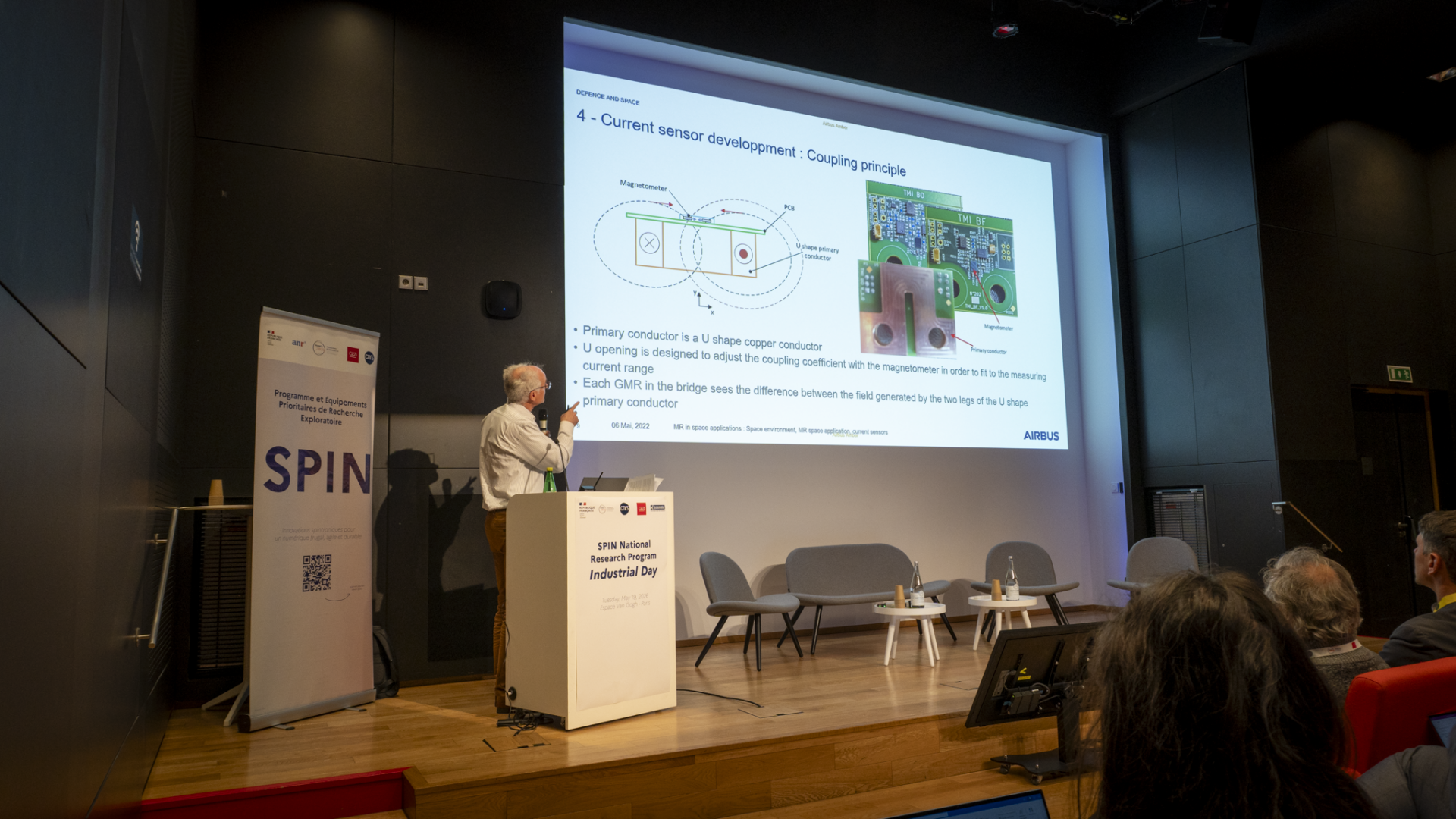
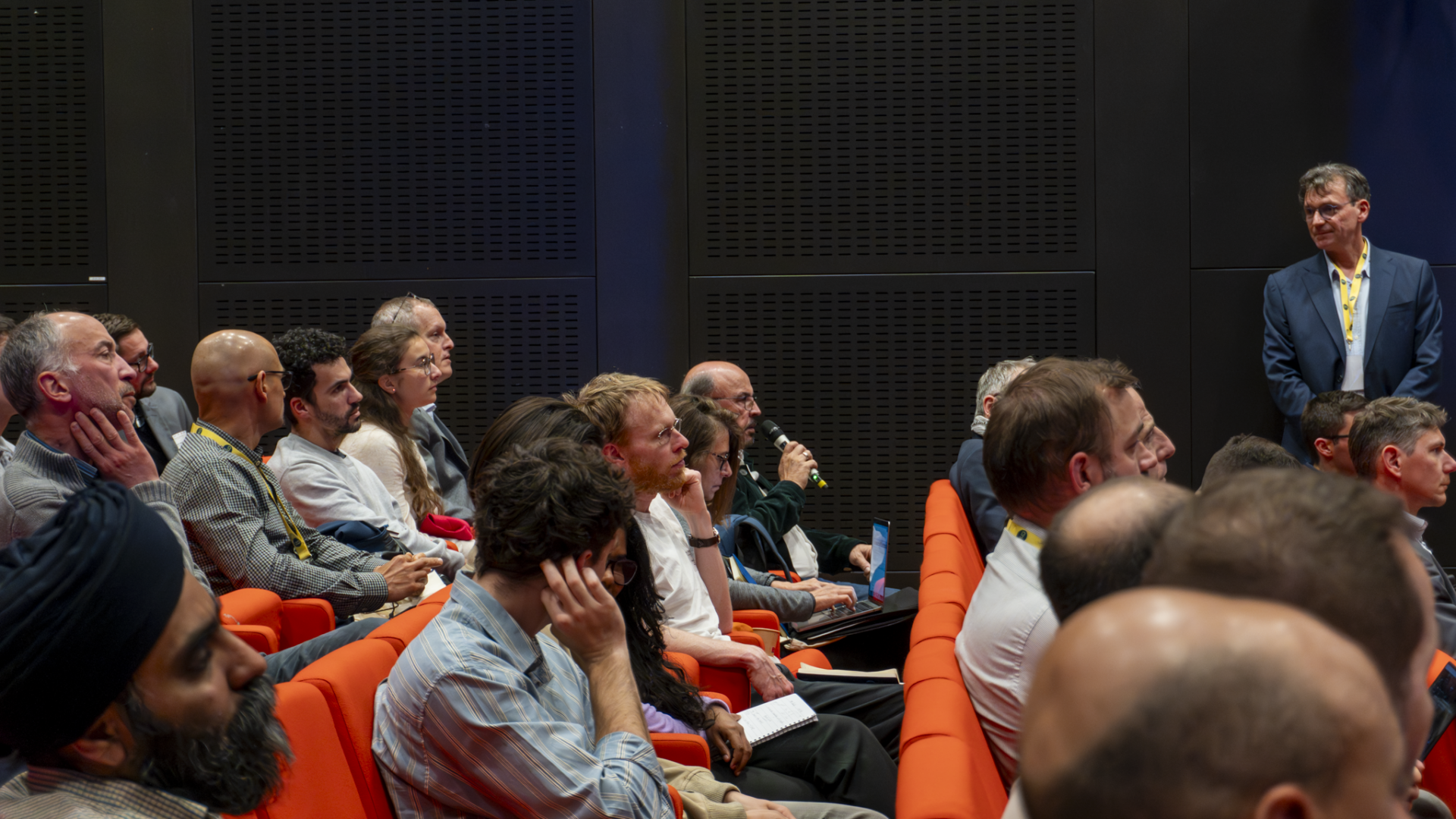
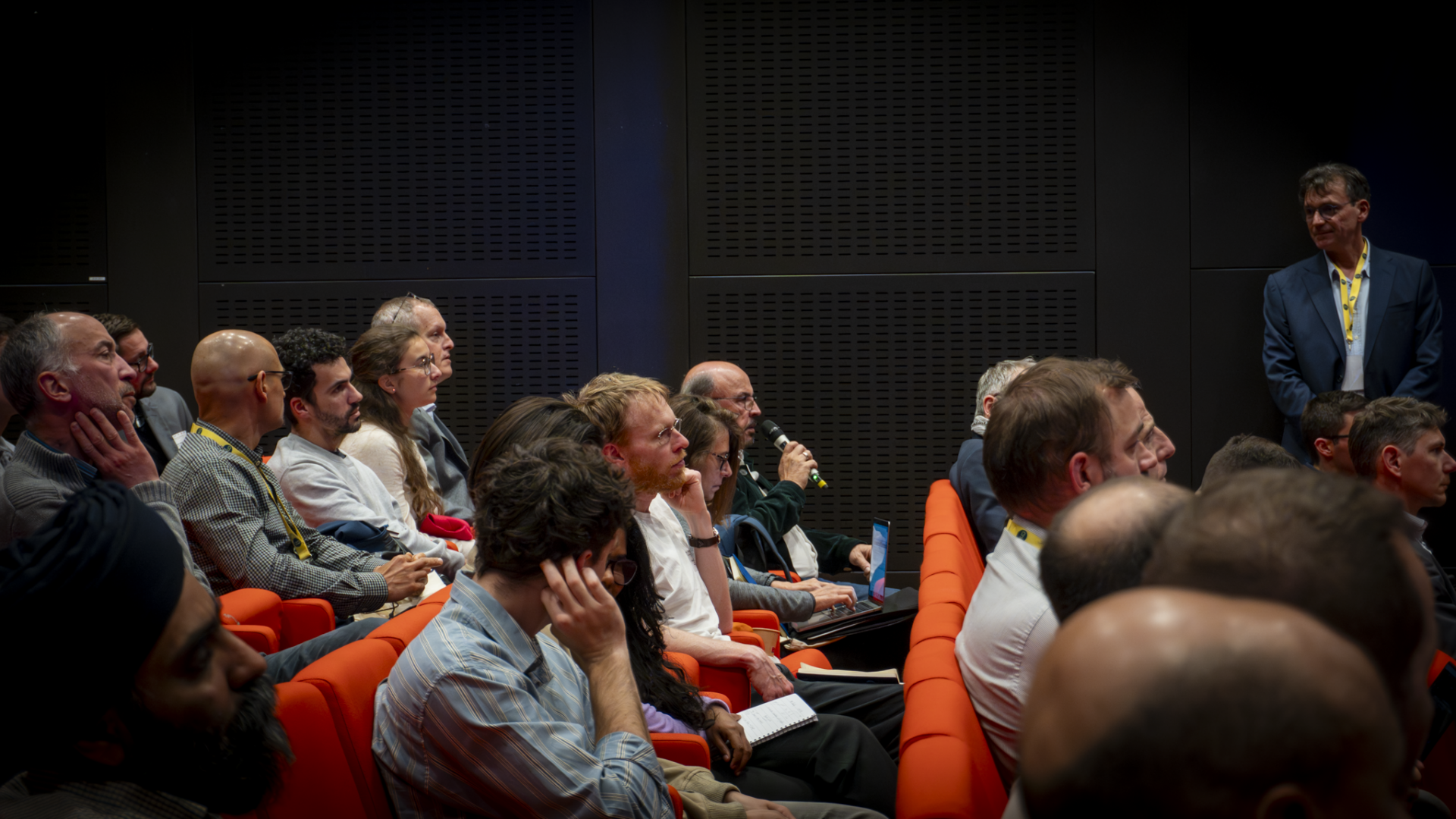
On 19 May, the Industrial Day brought together nearly 130 participants in person and online. Structured around three thematic focuses: sensors, materials, and radio frequencies, it aimed to identify industry needs for integrating spintronics into their developments.
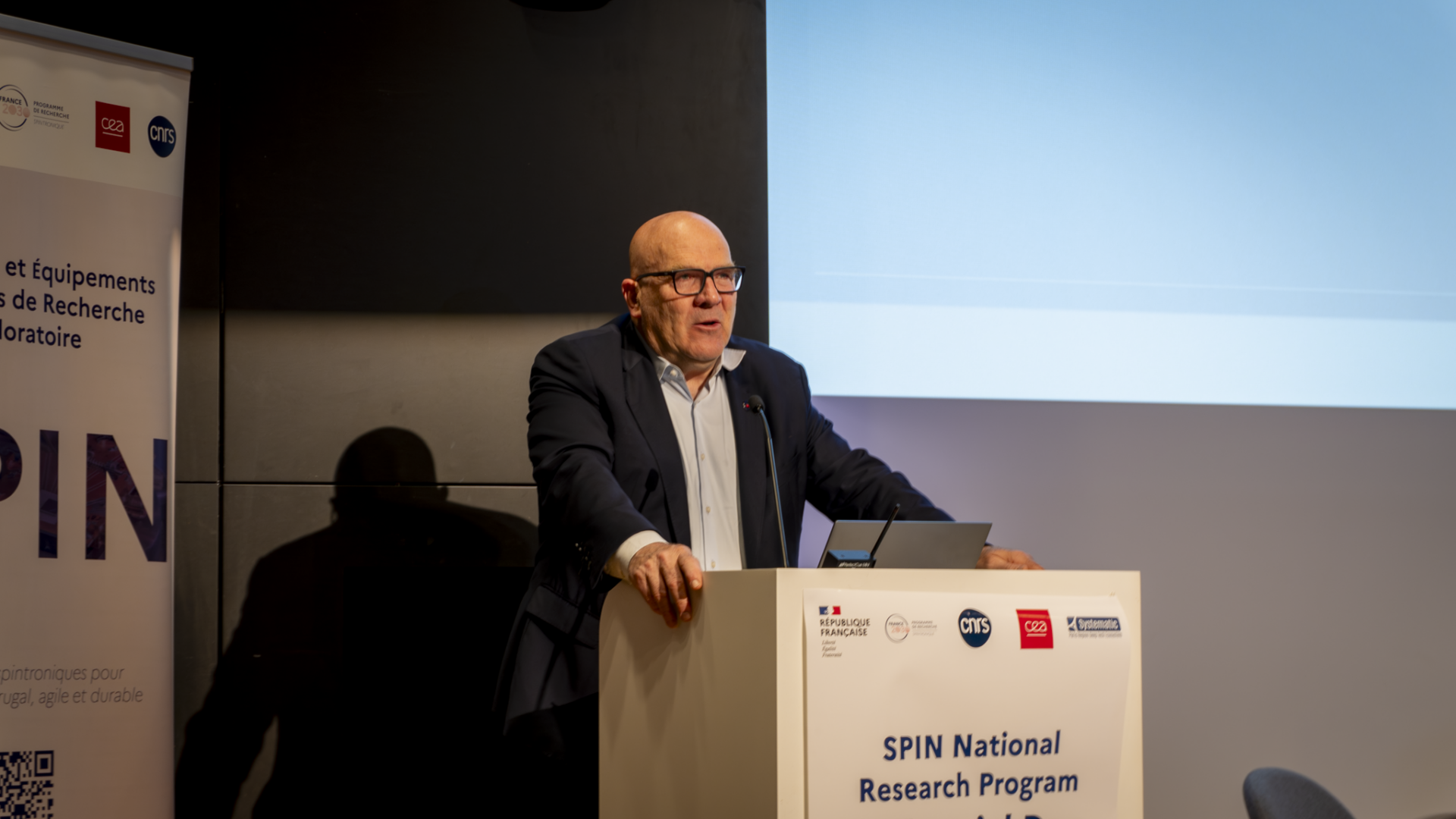
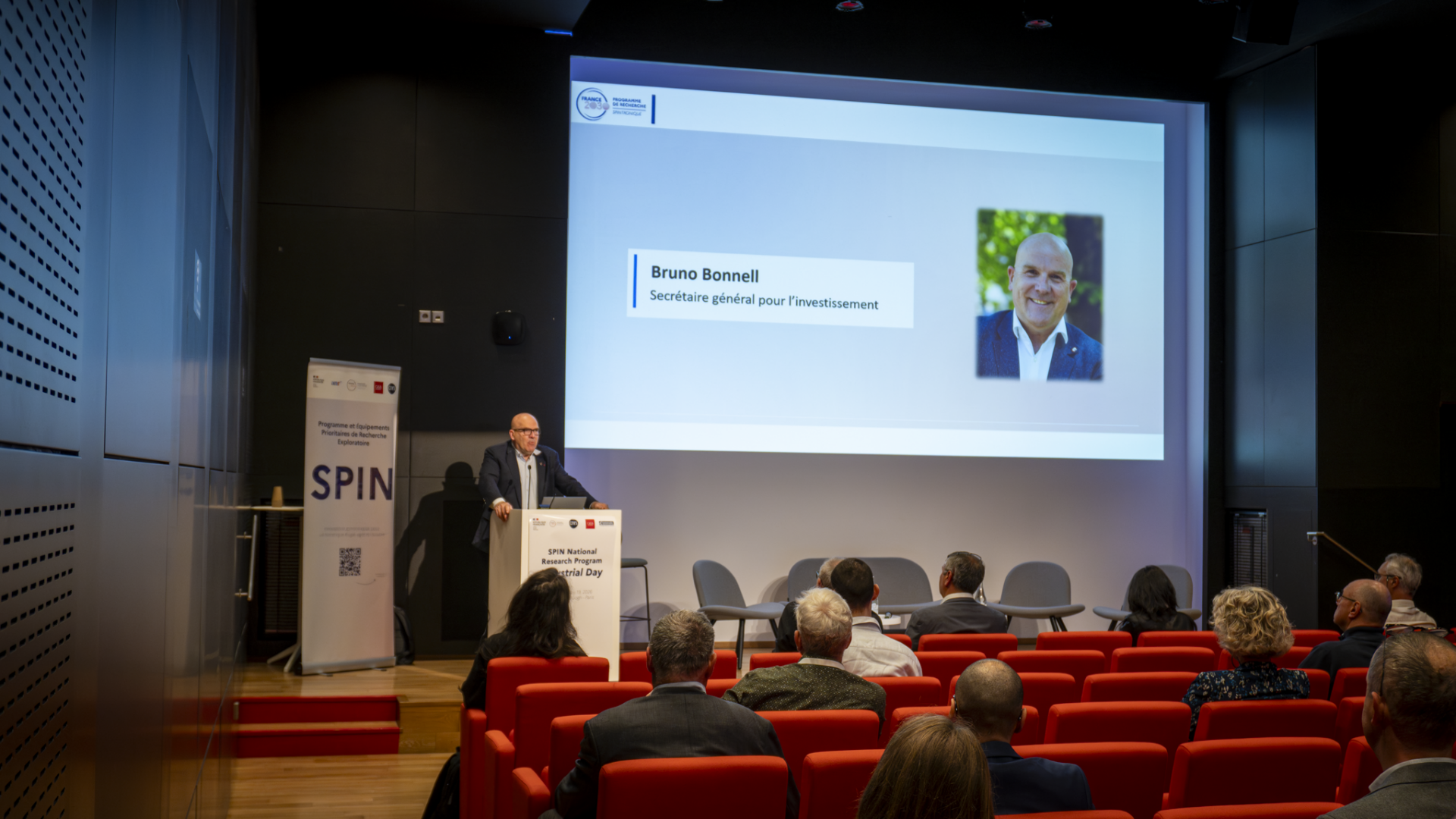
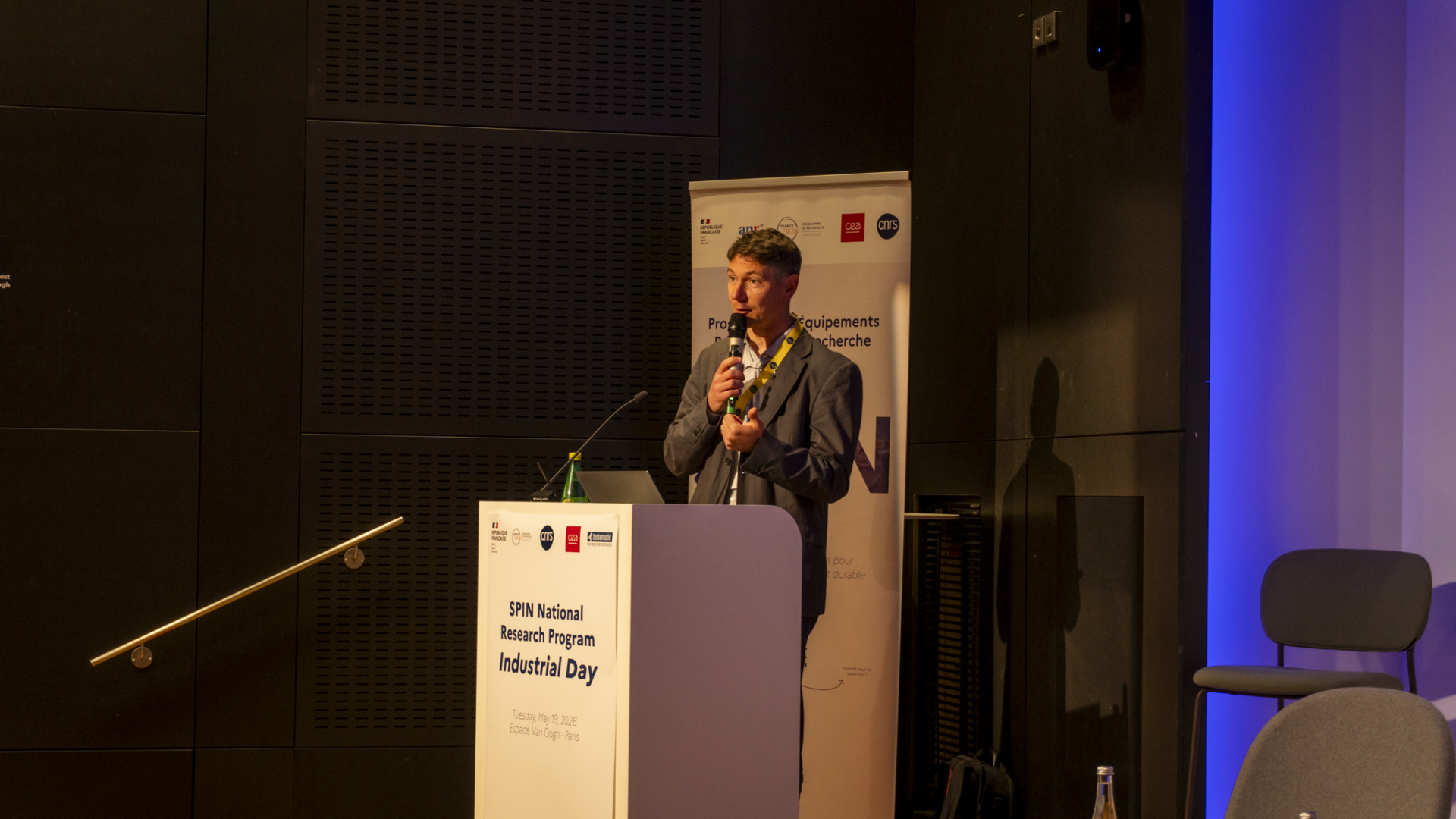
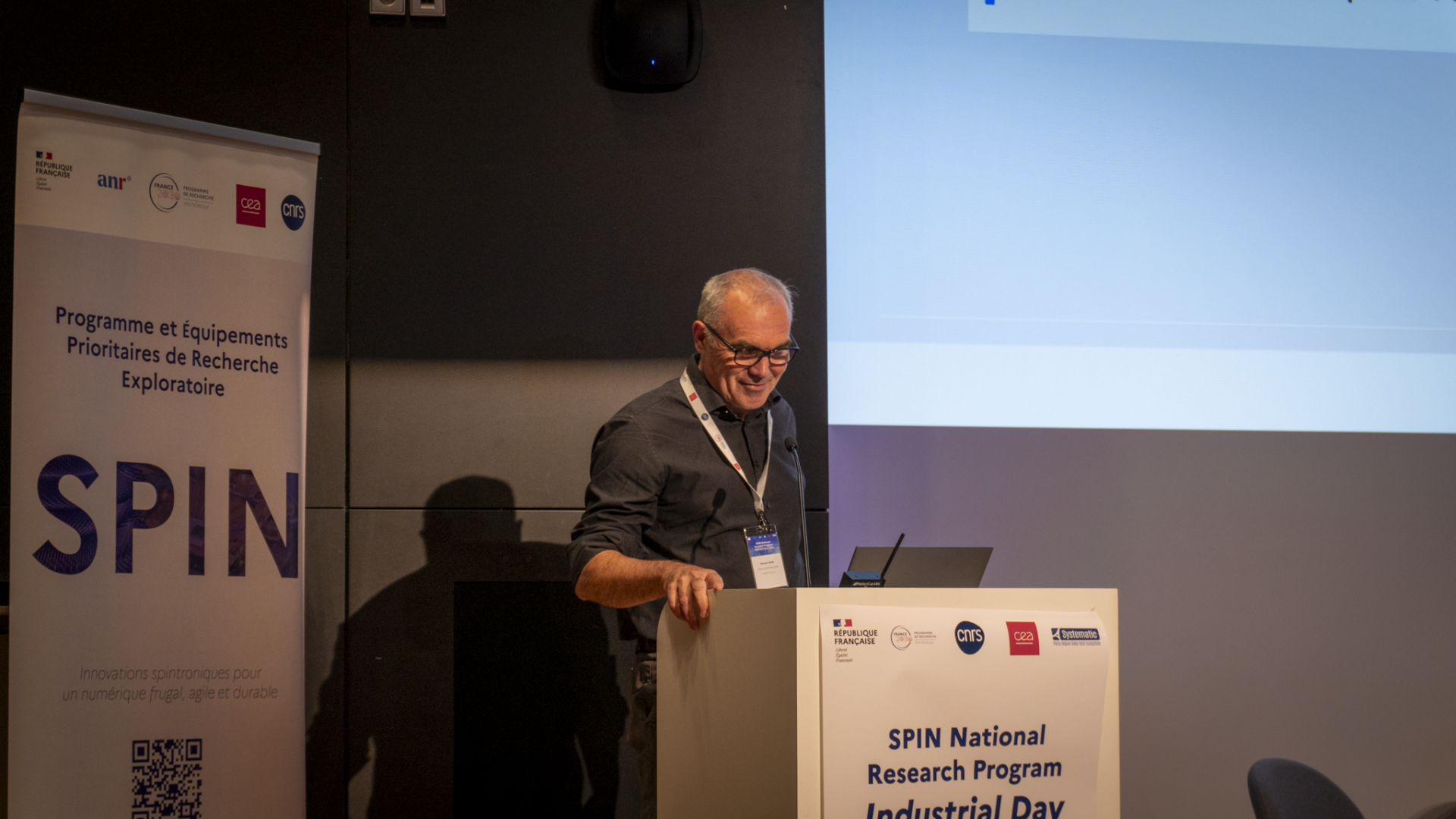
In his introductory address, Bruno Bonnell, Secretary-General for Investment (SGPI) in charge of the France 2030 plan, recalled the mission of Exploratory PEPRs such as SPIN: to explore future research avenues, unite a scientific community, and promote knowledge sharing. He emphasised the fundamental freedom that must be granted to researchers, the freedom to explore, to experiment, and also to make mistakes. As he put it with conviction: “researchers must be asked to do research.” Bruno Bonnell also spoke of the collective responsibility towards younger generations, stressing the importance of inspiring them to pursue research and join these scientific communities.
The PEPR directors, Vincent Cros (CNRS) and Lucian Prejbeanu (CEA), outlined the key valorisation initiatives, including the establishment of an industrial board, the development of an exploitation plan with the consulting firm Toplink Innovation, and the launch of the European project SPIN-CHIP under the Chips JU framework, supported at the French level by the Public Investment Bank (BPI).
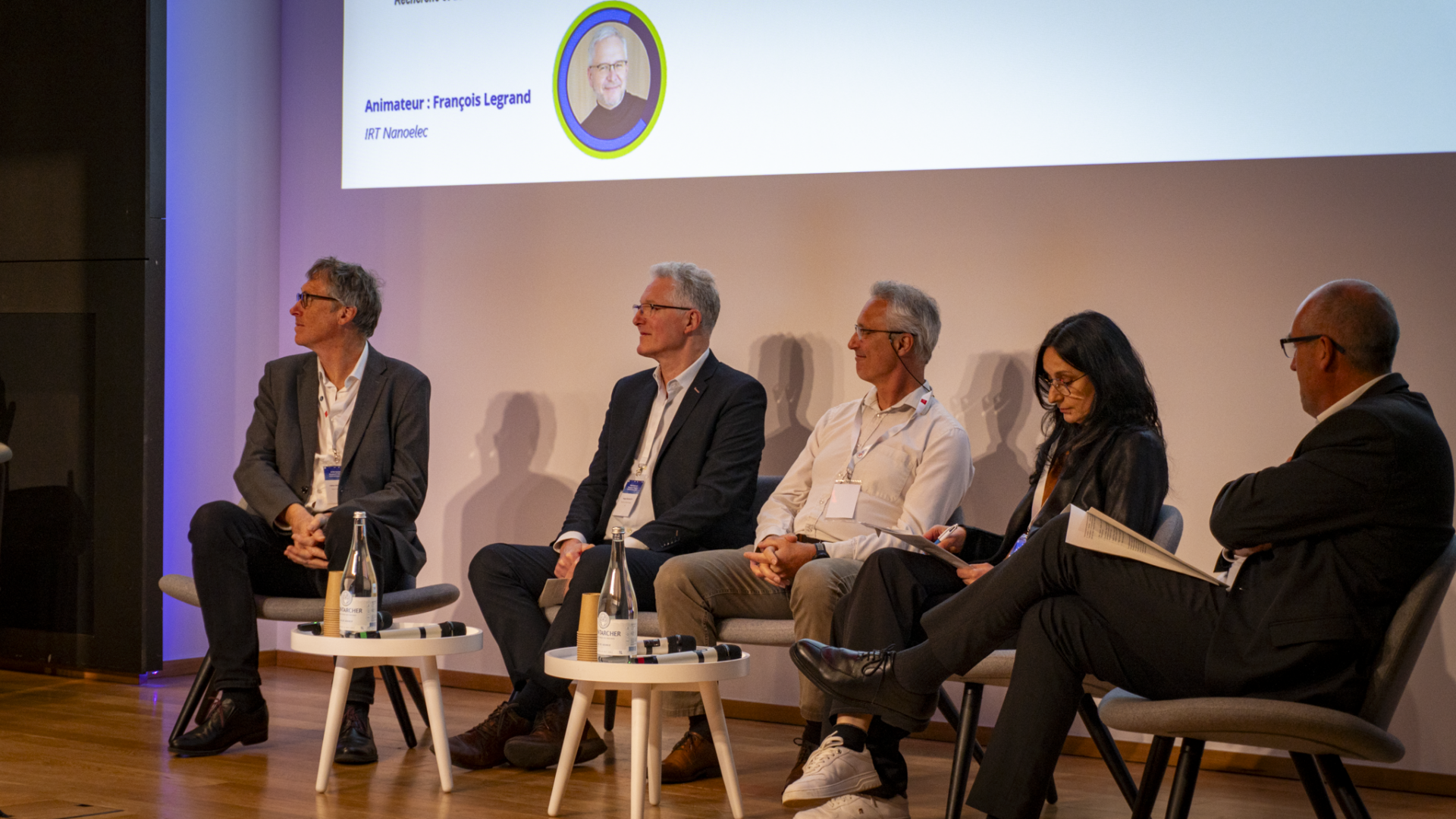
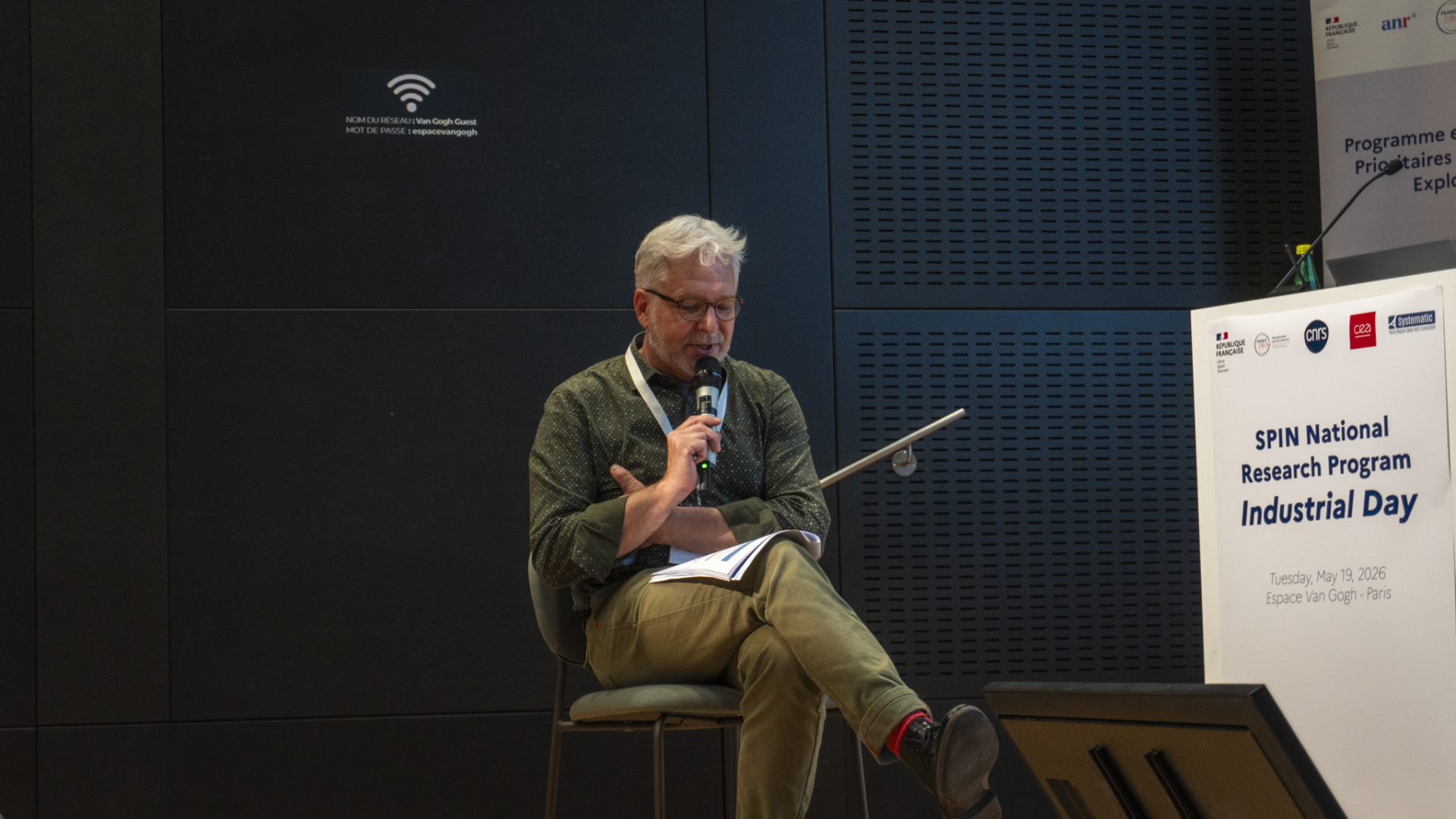
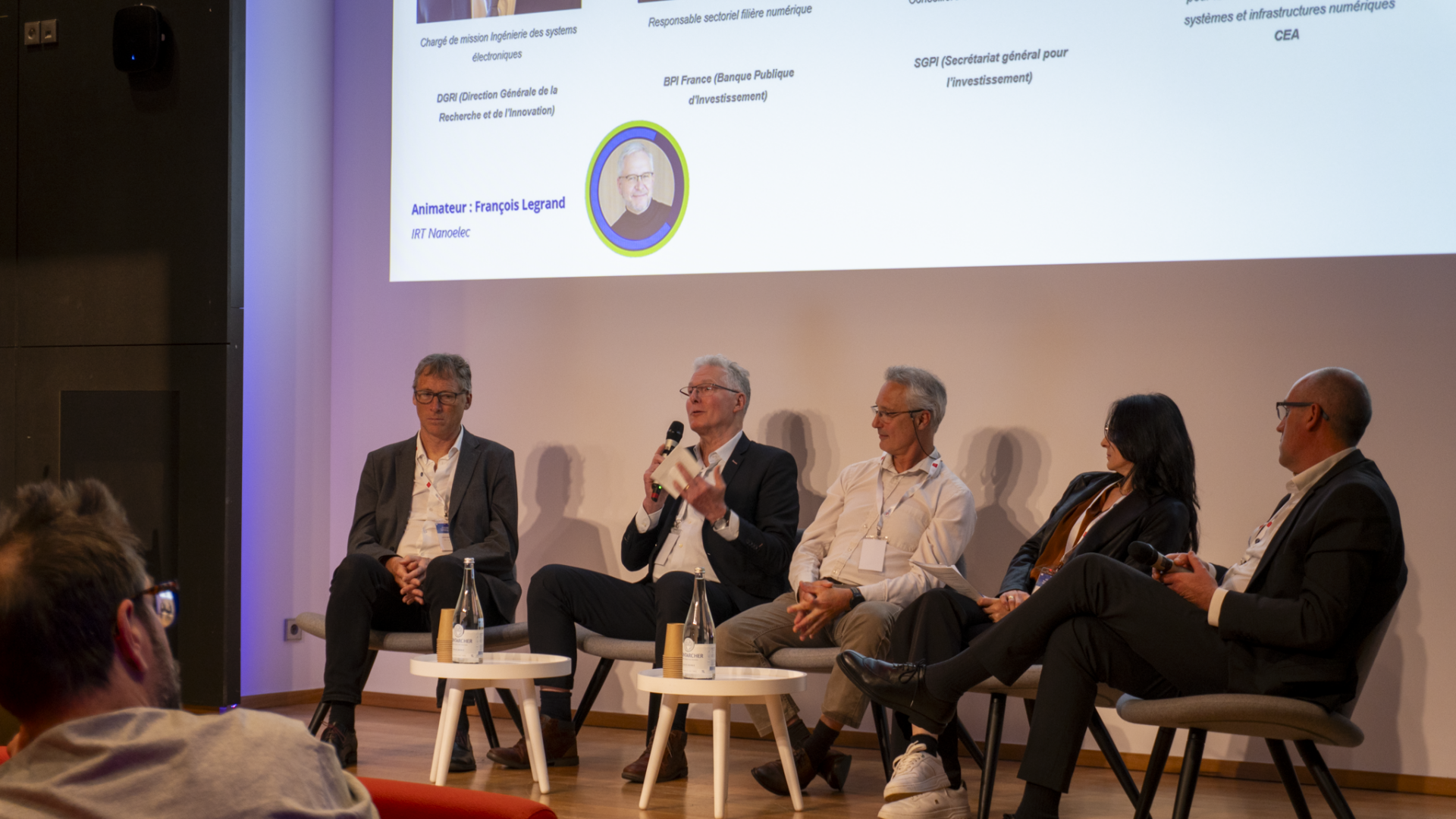
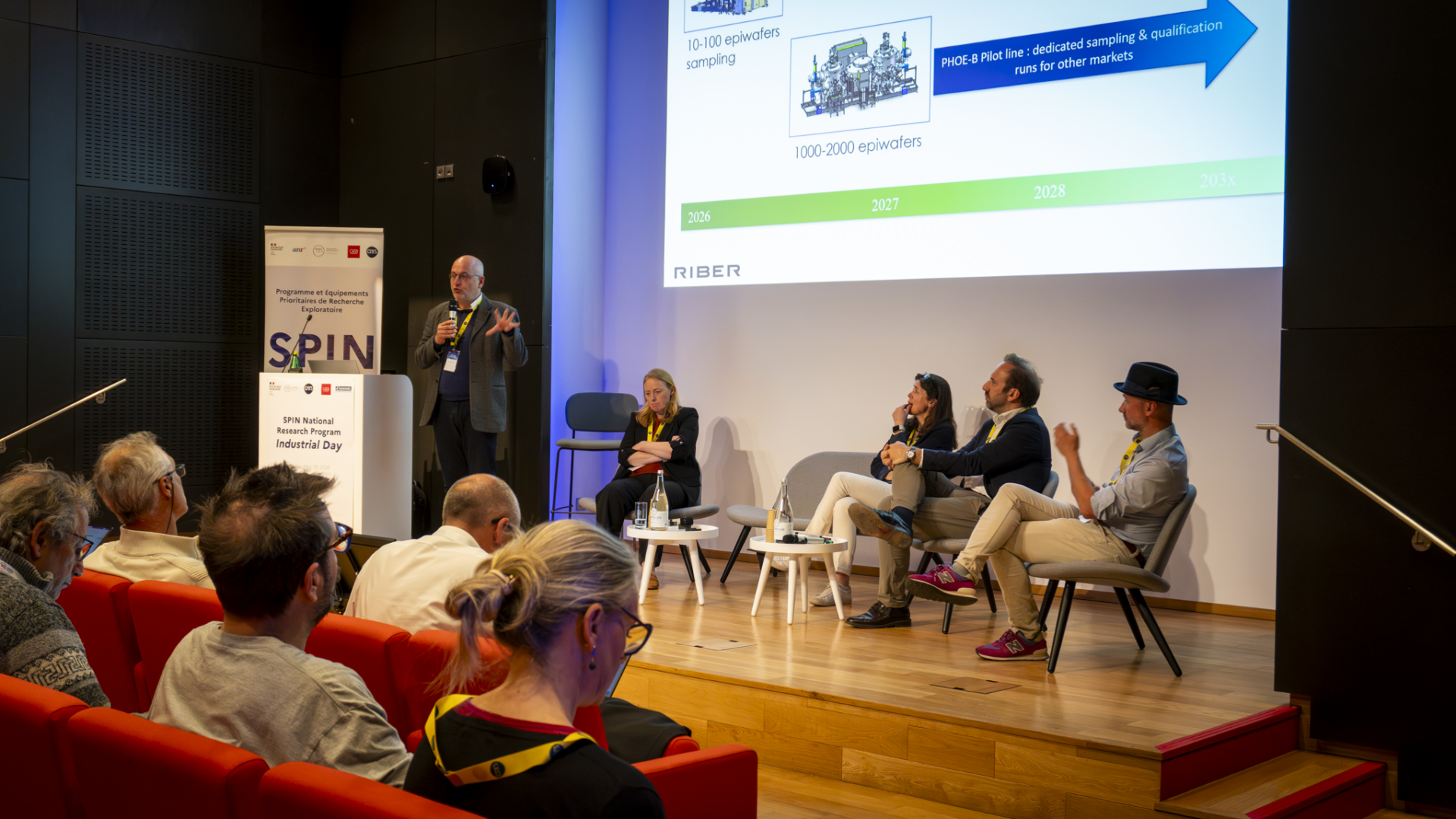
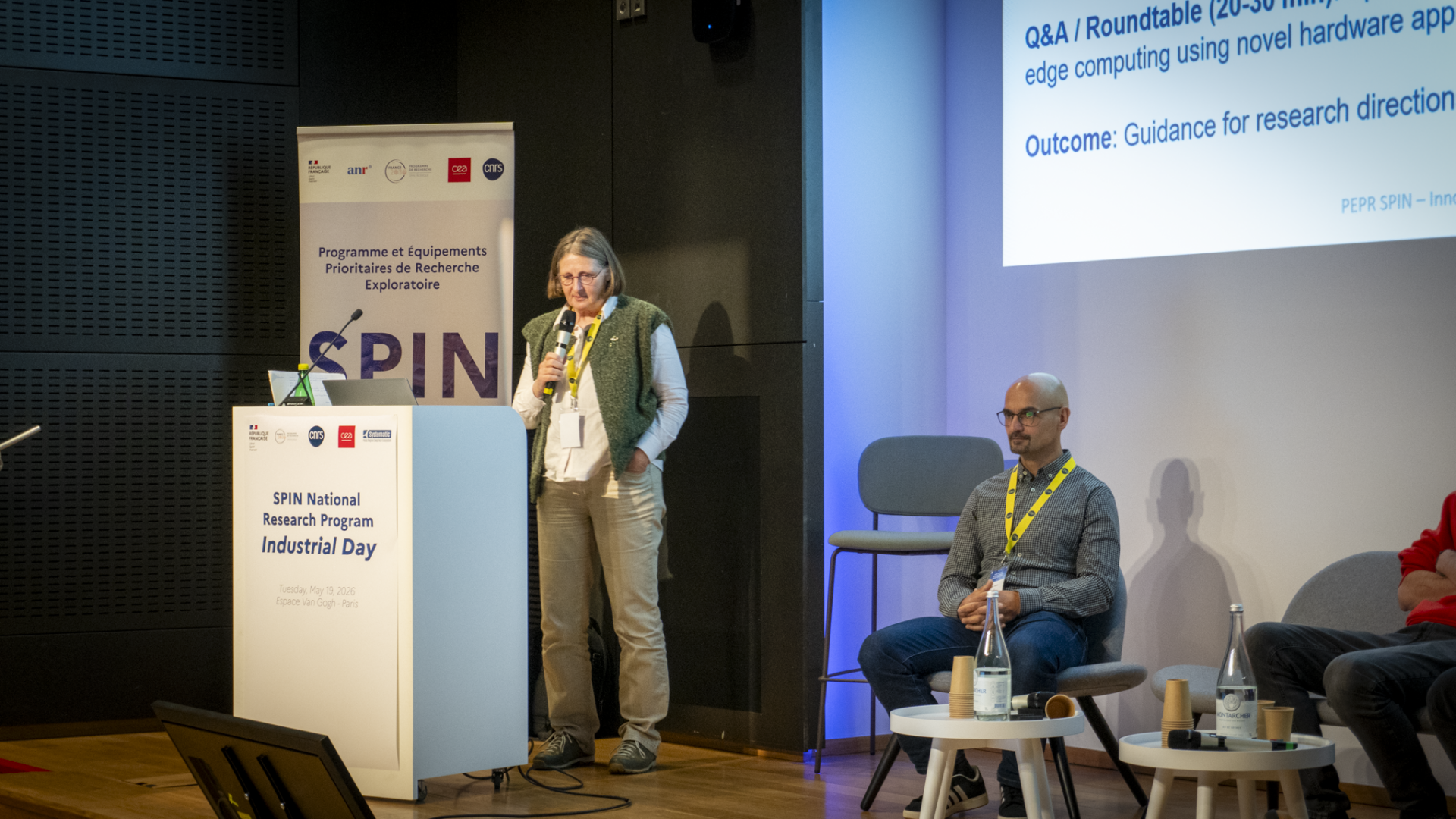
An institutional roundtable, moderated by François Legrand (IRT Nanoelec), then brought together several key stakeholders around the question “From Research to Innovation: How to Support Researchers in Entrepreneurship and Industrialisation?” :
> Katia Cargnelli, Barral, Technology Transfer Adviser, SGPI > Laurent Bechou, Mission Officer for Electronic Systems Engineering, DGRI (MESR) > Hughes Metras, Director, ASIC Programme Agency, ASIC (CEA) > Sergio Nicoletti, Electronics Mission Officer, Directorate-General for Enterprise, DGE > Fabien Boulanger, Sector Manager, Digital Industry, BPI
The discussions highlighted several priority areas. Participants first underscored the need to strengthen the involvement of institutional stakeholders, at both national and European level, to better support the transition from research to innovation. It was also noted that programme agencies can play a key role in gaining a better understanding of industrial ecosystems, particularly by drawing on competitiveness clusters, which have detailed knowledge of the landscape and the players involved.
Pilot lines were central to the discussions: presented as a promising tool, they are progressively being structured to serve both academic and industrial projects, and represent a concrete lever for advancing European orientation and fostering open innovation.
Participants also discussed the State’s strategic roadmaps and the emerging priority themes, among which spintronics and advanced materials are certain to feature prominently. All institutional representatives took the opportunity to highlight the quality and commitment of the research communities, citing the PEPR SPIN community in particular as an example of an especially engaged and united community.
The day continued with three application-focused sessions on magnetic sensors, advanced materials, and devices operating from GHz to THz.
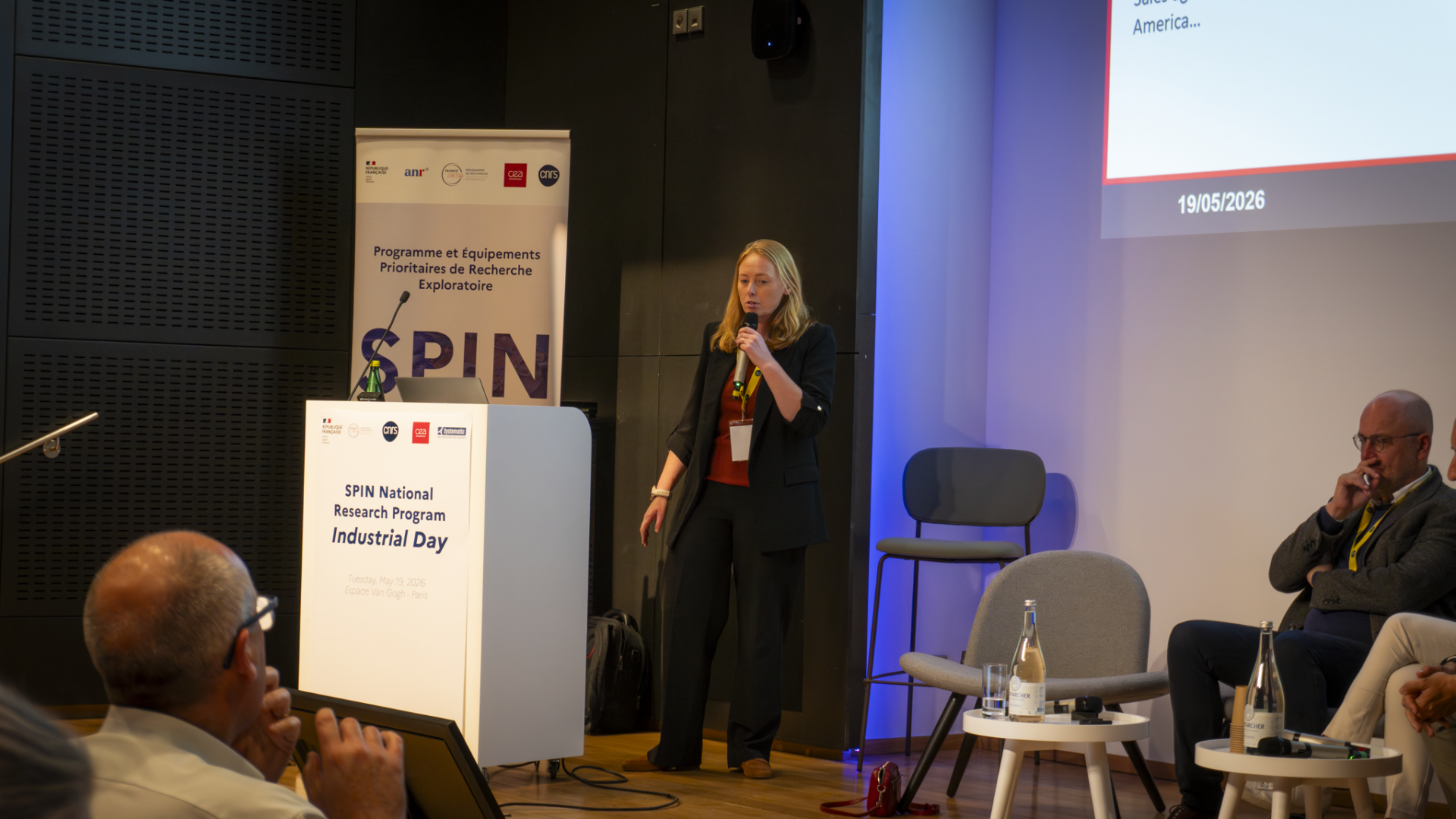
In each of these sessions, following an overview of the PEPR’s key challenges and actions presented by co-leads of targeted PEPR projects, several industry pitches detailing specific needs and dedicated roundtables structured the second half of the Industrial Day.
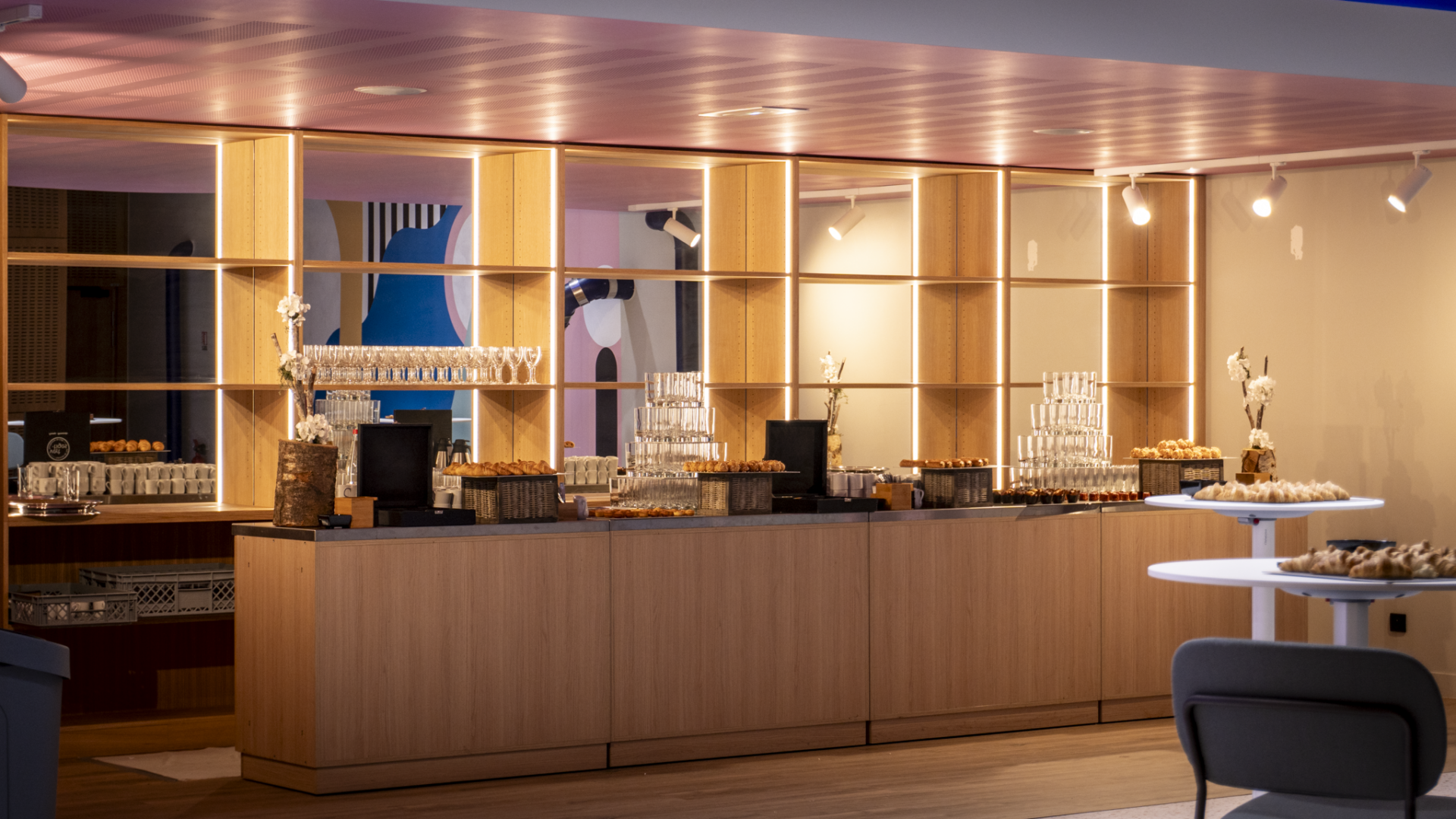
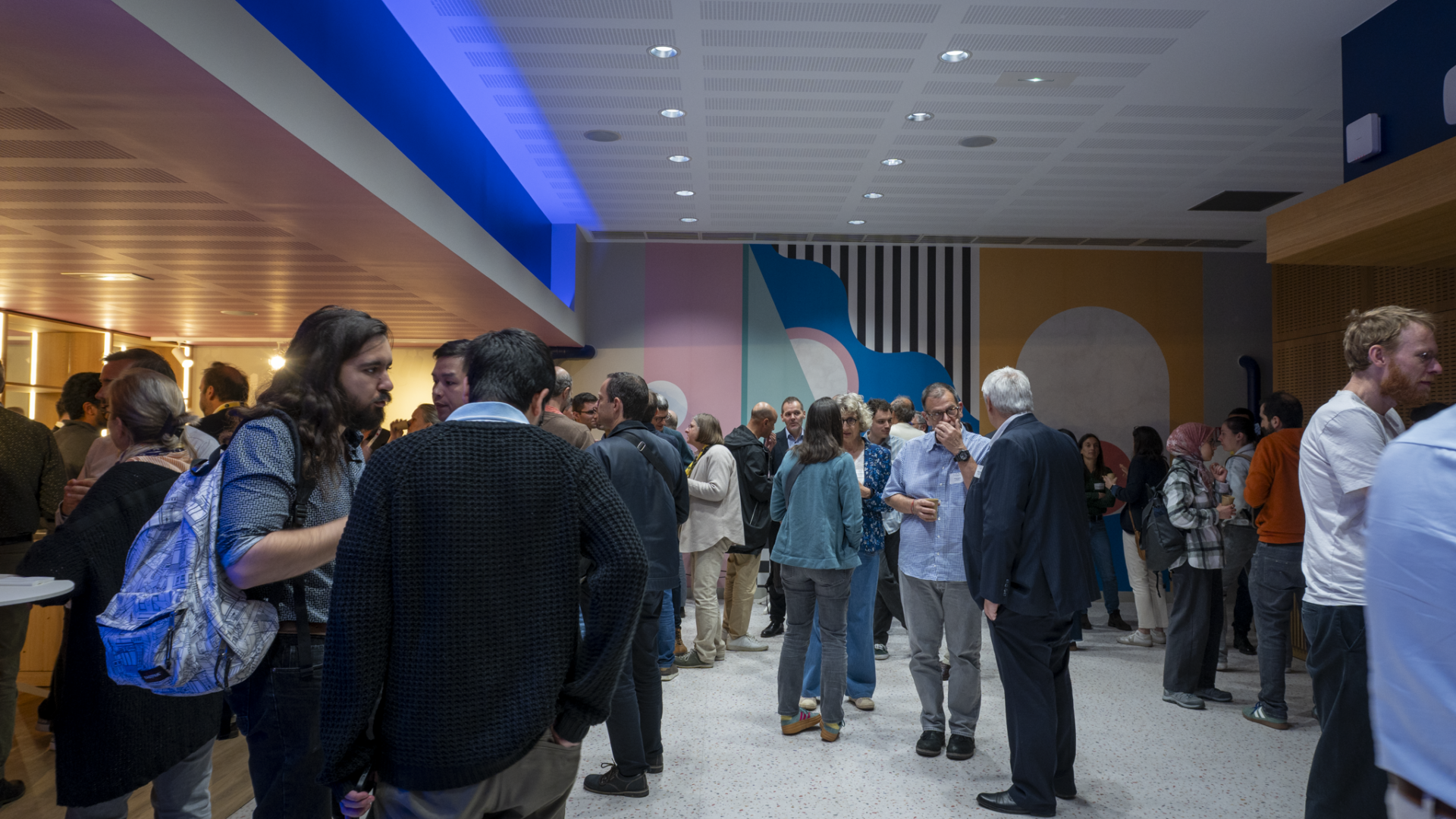
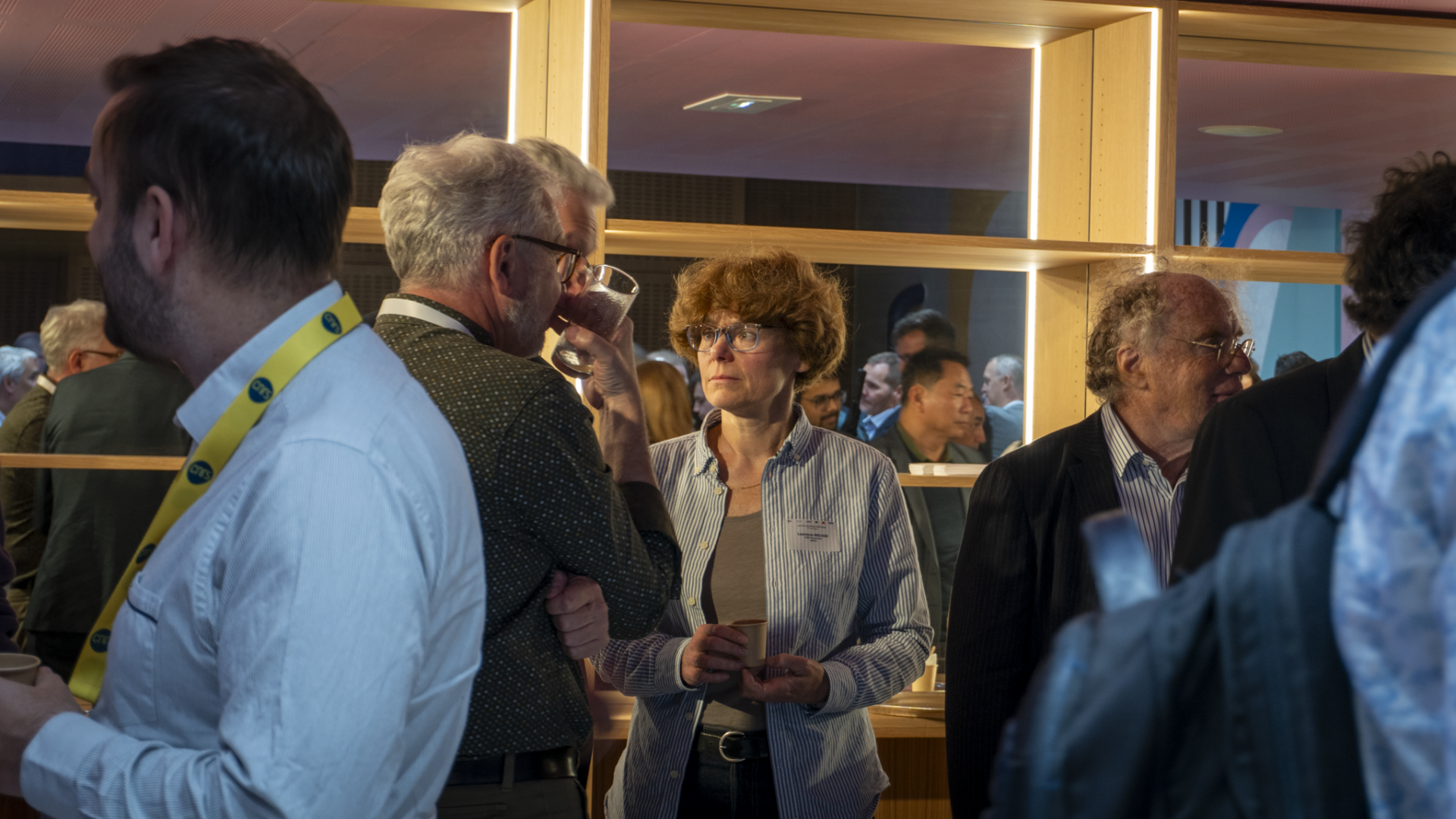
Both days concluded with cocktail receptions, allowing conversations to continue in a convivial atmosphere true to the community spirit that drives the SPIN Research Programme.