SPIN-CHIP: the European project launched on June 2nd and 3rd, 2026
Link to the project page
The SPIN-CHIP project, an awardee of the European Union’s CHIPS JU programme, marks a decisive milestone in the race for European technological sovereignty. With a total investment of €23.8 million over 42 months, it aims to demonstrate the full potential of magnetic tunnel junctions (MTJs) in the next generation of “made in EU” semiconductors. On 2 and 3 June 2026 at Thales, all partners gathered to officially launch the project.
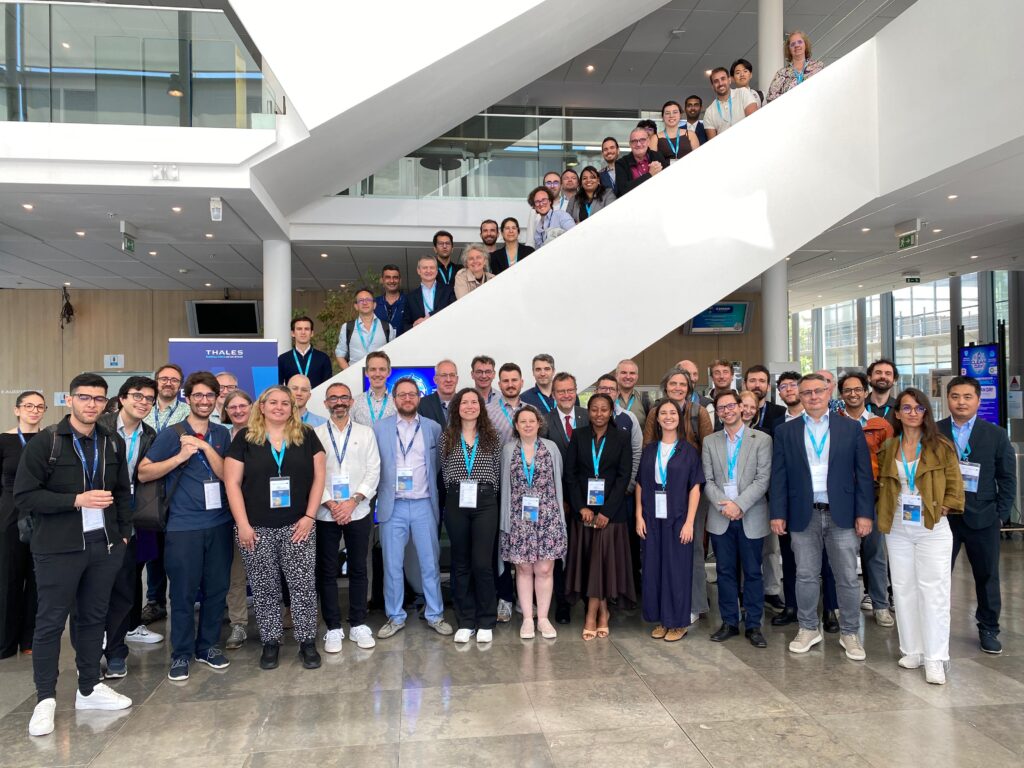
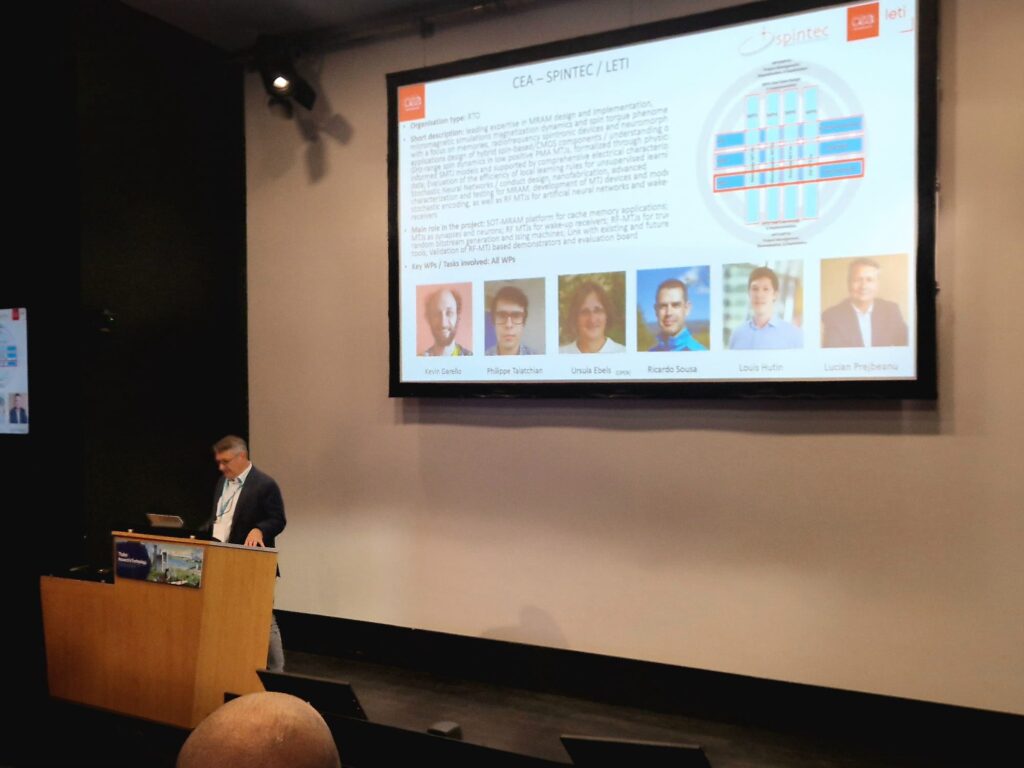
A technological challenge at the heart of European Strategy
Funded under the CHIPS JU programme over a period of 42 months, the SPIN-CHIP project aims to demonstrate the potential of spintronics and in particular magnetic tunnel junctions, for the next generation of “Made in Europe” microchips, delivering major advances in energy efficiency, sensitivity, speed, cost and performance.
Rooted in the developments of PEPR-SPIN, the project embodies an ambitious industrial vision for spintronics, bringing together a consortium of major European industry players: Thales, Infineon, Nanoexplore, ICAlps, Vertical Compute, Cardio and Beyond Vision.
Four technical pillars
The project is structured around four complementary research and development workstreams.
Memory: SPIN-CHIP is developing a high-density magnetic random-access memory (MRAM) specifically designed to withstand radiation. Primarily intended for space applications, this technology leverages MTJs as non-volatile storage solutions, combining performance and robustness in extreme environments.
Computing: The project explores the creation of stochastic magnetic tunnel junctions, opening the way to new computing architectures. Stochastic neural accelerators, probabilistic Ising machines: these innovations directly target improvements in the energy efficiency of embedded artificial intelligence, a critical issue for the deployment of AI at the network edge (edge computing).
Sensing: SPIN-CHIP is also refining ultra-sensitive magnetic sensors for precision biomedical applications. Cardiac activity monitoring is among the priority use cases, illustrating how spintronics can transform the medical devices of tomorrow.
RF Signal Processing: Finally, the project explores multifunctional magnetic tunnel junctions for radiofrequency signal processing, with applications in secure communications, a strategic area for defence and critical infrastructure.
Priority sectors with high Impact
The first use cases identified by the consortium span three strategic sectors: space, health and security. Dedicated performance indicators have been defined to rigorously measure the impact of developments across each of these domains.
Tripartite funding for a project of European Scope
SPIN-CHIP represents a total investment of €23.8M, co-funded by the European Commission (35%), BPI through the IDEMO Europe programme (55%), and additional co-funding from PEPR SPIN for French partners.
| Source | Montant |
|---|---|
| European Commission | 7,9 M€ |
| National co-funding | 9,3 M€ |
| Partner self-funding | 6,6 M€ |